Digital Feminism · Screen
Coded Bias
Kantayya follows Buolamwini’s research to connect facial classification, women’s expertise and public control of technology.
- Director
- Shalini Kantayya
- Year
- 2020
- Region
- USA
- Duration
- 90 min · Women Make Movies distribution edition
Reading the film
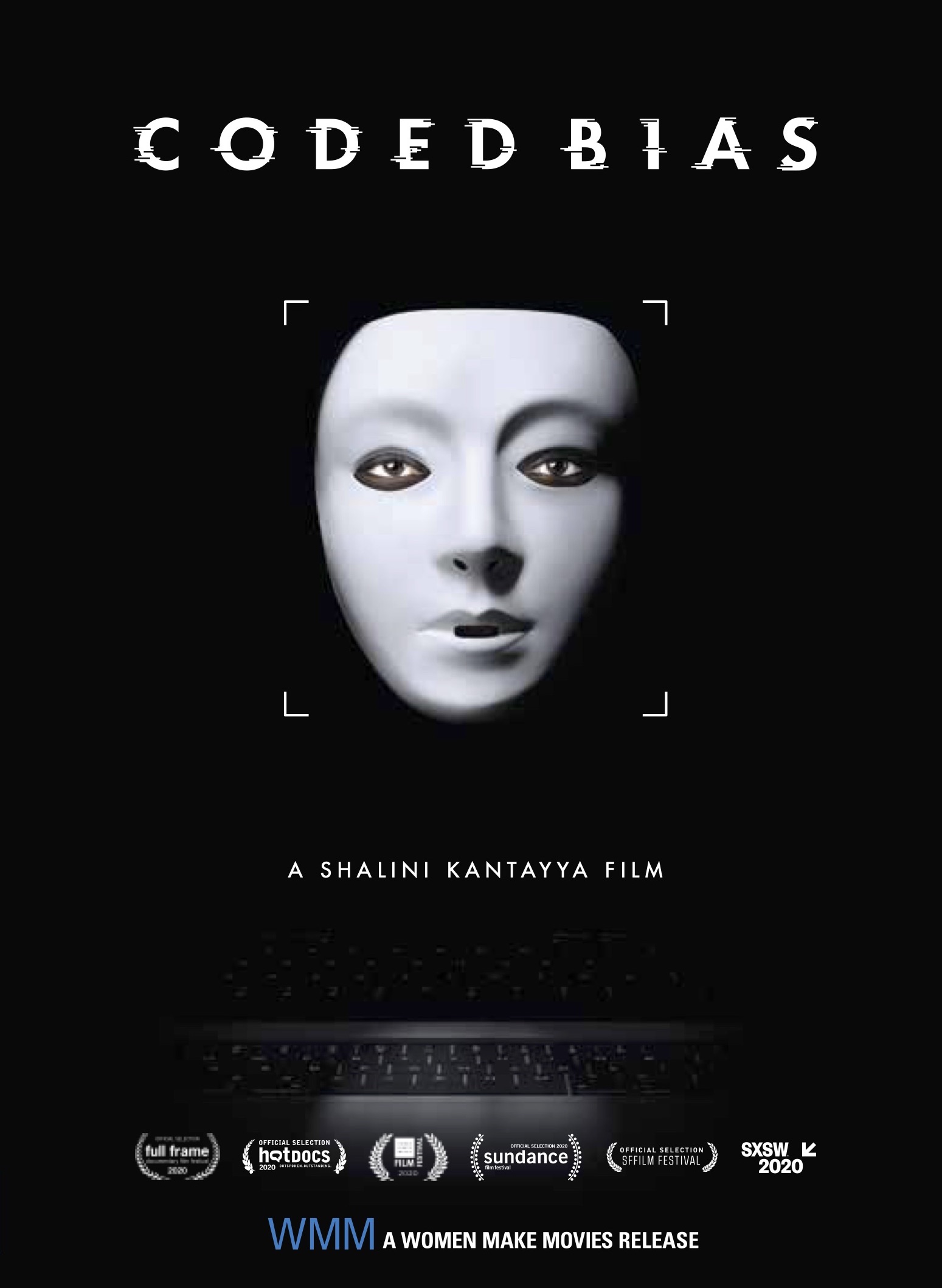
A white mask helps a computer detect a face it failed to see without one. In Coded Bias, this encounter becomes an entry into a larger question: what happens when technical systems decide who can be recognized, trusted or offered an opportunity? Shalini Kantayya’s documentary follows Joy Buolamwini’s investigation and places it beside the work of other researchers and advocates. The problem extends beyond a defective camera. A technology can become an institutional gatekeeper before the people subject to it can examine its rules.
The missing face changes who can count as an expert
Buolamwini’s experience matters because it connects technical testing to a body for which the system was not optimized. Her research with Timnit Gebru, Gender Shades, makes unequal performance examinable through subgroup evaluation. The experiment studies commercial gender classification; it does not establish the accuracy of every identity-recognition system. Keeping the distinction makes the argument stronger: evidence can be precise without losing its political significance.
The film also changes the expected picture of technological expertise. Women and people of color are not merely injured users invited to describe their feelings after an invention. They investigate, interpret evidence and formulate public demands. This matters for feminist criticism because authority often moves in the opposite direction: the people who encounter a failure are treated as exceptional cases, while those whose bodies fit the system retain the right to define normal performance.
Kantayya explains in her director interview that this emphasis follows the people she found leading the challenge. Their inclusion is consequential when it changes which questions are asked and whose harms receive scrutiny. A more diverse cast of experts, however, cannot by itself transfer control over a company’s products or a public agency’s purchasing decisions.
Documentary borrows the imagination of science fiction
The film’s subject is difficult to photograph: automated decisions operate through models and infrastructures whose consequences can be felt without their processes becoming visible. Kantayya describes using graphic effects, a simulated machine perspective and an AI voice to bring that opacity into the documentary’s form. The treatment of Microsoft’s Tay chatbot moves between documented utterances and a constructed voice. It should be understood as a filmmaking device, not as access to an AI’s consciousness.
This device turns an abstract system into something viewers can confront, but also creates a tension. A memorable machine voice may help organize attention while suggesting that one autonomous intelligence connects very different applications. Hiring, policing and welfare administration have distinct institutions, data and avenues of appeal. A feminist reading can value the film’s accessible imagination while asking where those differences need to be restored.
The director’s conversation with Filmmaker also challenges whose science-fiction futures become technological common sense. Re-centering women’s expertise changes both the people authorized to criticize an invention and the people permitted to imagine alternatives. Critique is not confined to asking for admission to an unchanged technical future.
Recognition can become an unwanted exposure
Better detection is not automatically a benefit. A system that recognizes darker faces more reliably can also make surveillance more effective. The political questions include whether a use is necessary, whether people have meaningful choices and who may contest the decision to deploy it. Accuracy is one question among several; it cannot settle legitimacy on its own.
The film connects research to civic organizing and public oversight. That connection resists the comforting ending in which a scientist discovers a defect, a company repairs it and the problem disappears. A voluntary corporate pause is not a durable public right. Nor should later company decisions be retrospectively attributed to a single study without evidence of the particular decision and its timing.
This is also where the film asks something of its viewers beyond sympathy. If biometric collection or automated screening is built into everyday access, an individual’s supposed consent may be an acceptance made under constraint. Treating those arrangements as civil-rights questions brings institutional obligations into view, rather than asking each person to become exceptionally skilled at hiding from a camera.
From seeing bias to changing authority
The official educational guide provides a route from the film to questions about automated decisions and community oversight. It is useful to keep the film’s historical setting visible: the systems and debates documented around 2020 do not establish the present state of every jurisdiction or model. The documentary is an intervention in a continuing struggle, not a certificate that the struggle has been won.
Read it with Data Feminism for questions about categories, context and labor, and with Not My AI for Latin American public-service cases that ask whether automation is needed at all. The Cleaners reveals another part of the same apparent automation: workers whose decisions keep platforms running. Together these works shift attention from whether a machine sees everyone to who has the power to decide how anyone is seen.


Reader responses
Discussion
Share your response and continue the reading together.
Join the Discussion
Loading comments...
Support Us
If you find our content valuable, please consider supporting FemRes.