Mother-Daughter Relationships · Books
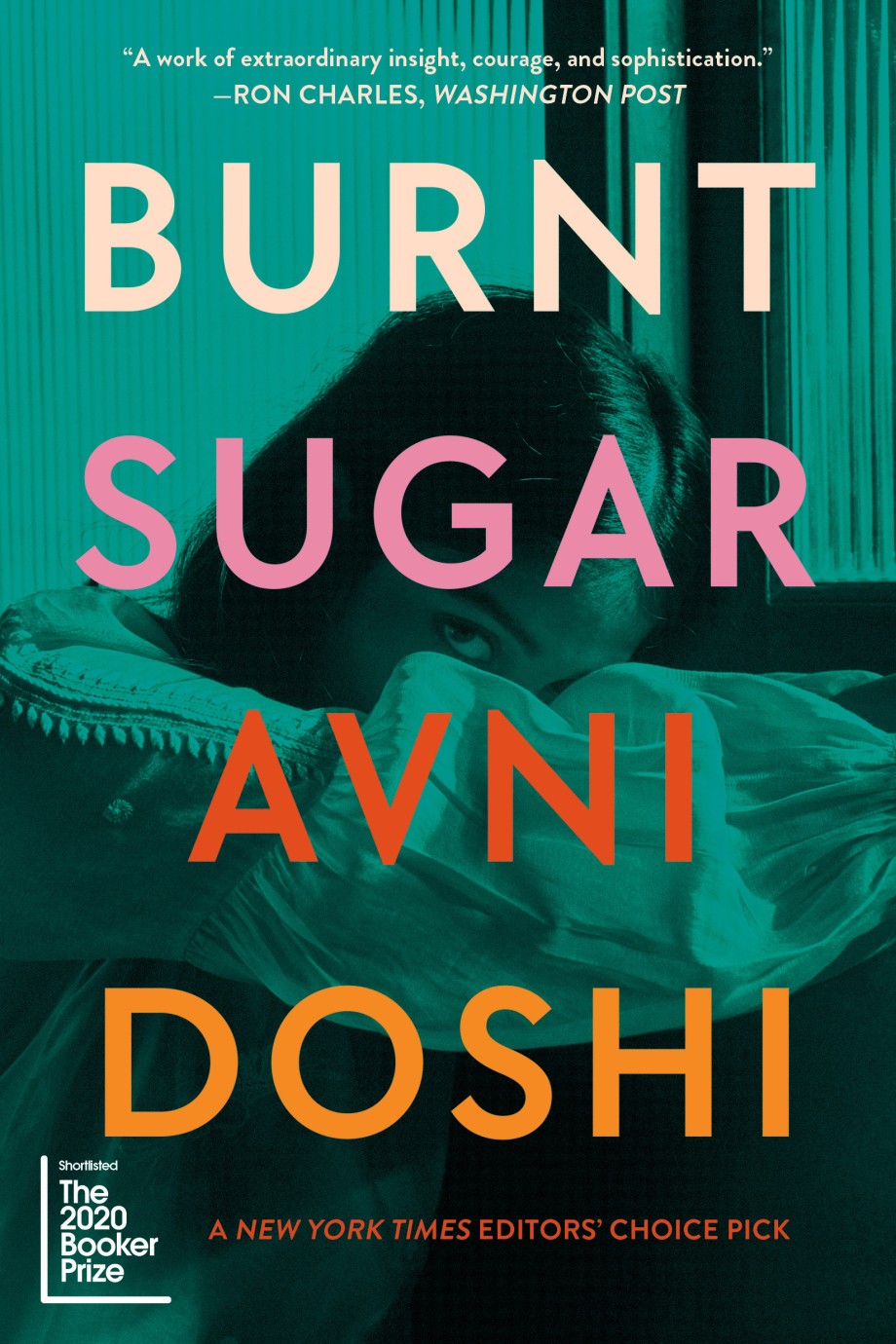
Burnt Sugar
Avni Doshi’s Booker-shortlisted novel turns a mother–daughter care conflict into a study of memory, maternal ambivalence, and the limits of reconciliation.
Review and reading guide
Avni Doshi’s Burnt Sugar—first published in India as Girl in White Cotton and shortlisted for the 2020 Booker Prize—begins with Antara admitting a pleasure that the ideal of dutiful daughterhood makes difficult to say aloud: her mother’s suffering can feel like a form of vindication. The novel’s question is not whether Antara is right to resent Tara, but what happens when a history of care, neglect, and injury has no agreed account.
Tara once left an arranged marriage for an ashram and pursued a life that refused the expected script of the self-sacrificing Indian wife and mother. That refusal gives the novel one of its sharpest tensions. Tara’s desire for a self beyond marriage is not itself a wrong; the harm lies in the ways her choices leave a young Antara neglected and dependent on others. The book does not make autonomy and care simple opposites, or treat a woman’s wish for freedom as proof that she is a bad mother. It asks who is allowed to choose, who absorbs the consequences, and who later gets to name what happened.
The adult Antara narrates through memory while Tara’s memory is fading. This makes recollection more than background: it is the contested ground of their relationship. Antara carries a detailed record of abandonment and humiliation; Tara cannot always confirm, dispute, or even remember the same past. The daughter’s testimony matters, but it is not a neutral transcript. Her bitterness shapes what she notices, while Tara’s loss of memory can neither erase the injury nor provide the recognition Antara wants. The novel lets uncertainty remain without using it to excuse either woman.
A crucial dimension missing from a simple daughter-versus-mother account is Antara’s own experience of motherhood. After having a child, she confronts the exhaustion, physical demands, and ambivalence that her inherited ideal of total maternal devotion cannot comfortably contain. She had imagined being unlike Tara; becoming a mother unsettles that promise. Antara’s resentment toward her baby does not make her a replica of her mother, just as Tara’s earlier refusal of maternal self-erasure does not undo the neglect Antara experienced. The novel traces how expectations can pass between generations even when women consciously resist them.
Caregiving brings that history into the present. Antara is expected to look after the woman she remembers as having failed to look after her. The novel does not turn this into a clean moral exchange—care given now does not repay care withheld then—and Tara’s vulnerability does not obligate Antara to forgive. At the same time, Antara’s anger does not make care effortless or remove the dependence created by illness. By keeping both the labor and the resentment visible, Doshi asks why intimate care is treated as a daughter’s private duty and what happens when that duty has no language for refusal, repair, or shared responsibility.
Set in Pune and focused on one family, Burnt Sugar should not be made to stand for a single “Indian” experience of motherhood. Its attention is narrower and more unsettling: a family’s class position, Tara’s rebellion, Antara’s marriage and new motherhood, and the changing authority of memory. The caustic first-person voice keeps readers close to Antara without making her the final judge of Tara. The result is not a simple reconciliation story. Memory loss changes what the two women can share, but it cannot return the past in a form that settles their account.
Read beside Adrienne Rich’s Of Woman Born: Motherhood as Experience and Institution, the novel’s family history opens onto a useful distinction: lived mothering is not the same as the social institution that assigns women responsibility, virtue, and blame. Rich offers a theoretical frame; Doshi’s fiction keeps that question inside the uneasy, unequal particulars of two lives.
For publication context, see Penguin Random House’s book page and the 2020 Booker shortlist. Doshi discusses maternal ambivalence in a Guardian interview; a peer-reviewed study in Journal of Literary Studies examines ambivalence in both mothering and being mothered.


Explore another medium
- Films
The Watermelon Woman
Cheryl Dunye
Cheryl Dunye’s invented archive asks who can make Black lesbian history credible, linking documentary conventions, licensing costs and unequal queer intimacy.
Memory - Films
Daughters of the Dust
Julie Dash
Julie Dash makes women’s memory and migration a question of historical authorship through nonlinear time, an unborn child and the material traces of slavery.
Memory
Reader responses
Readers' notes
Share your reading or add a thread worth following further.
Join the Discussion
Loading comments...
Support Us
If you find our content valuable, please consider supporting FemRes.