Women's Literature · Books
A Room of One's Own
Woolf links income, institutional access and literary value to women’s writing, leaving tensions around anger and creative independence open.
Review and reading guide
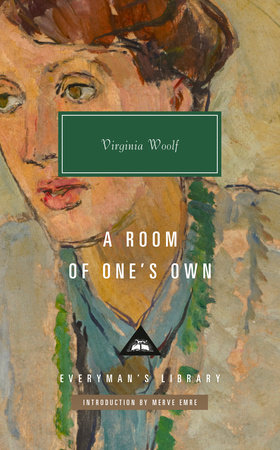
Virginia Woolf’s A Room of One’s Own, first published in 1929, expands lectures delivered at two Cambridge women’s colleges in 1928. It turns “women and fiction” into a question about the conditions of writing: income, space, education and experience, and the institutions that decide whether work has literary value. The room and five hundred pounds a year give material specificity to creative freedom rather than reducing it to a declaration of independence.
An interrupted thought and a closed library
The opening narrator is stopped while thinking on a college lawn and redirected to the path. Seeking a manuscript in the library, she is refused entry without a scholar’s escort or introduction. Exclusion becomes an action: institutions regulate where a body can go, which materials it can encounter and whether its thought can continue. Talent does not develop separately from these permissions.
This “I” is not transparent autobiography. The text identifies Oxbridge and Fernham as inventions and uses walking, association and interruption to stage an argument. Its form lets readers observe how an opinion develops and assess the speaker’s prejudices. Fictional devices serve criticism without requiring each incident to be treated as a verified event in Woolf’s life.
Income changes the relations of speech
In chapter two, the narrator contrasts an aunt’s fixed legacy with earlier piecemeal employment. The change is not only purchasing power: it reduces the need to flatter someone who controls a livelihood and makes independent judgment possible. Economic arrangements thus shape the relations within which one can assess a painting, a book or the world another person governs.
This does not make political rights irrelevant or establish five hundred pounds as a timeless threshold. A specific income arrangement becomes a condition of thought. Readers can extend the question: whose work maintains a stable life? How do unpaid care, low wages and household space make the same “room” mean different things to different women? These questions develop the material analysis without pretending the essay settles every situation.
Lost talent and literary value
Judith, Shakespeare’s invented sister, has imagined talent without her brother’s educational, theatrical and practical opportunities. Her story is a counterfactual challenge to the claim that genius will naturally become visible, not a recovered historical record. Whether talent leaves a work behind depends on opportunities to train, move and live without coercion.
Woolf also examines critical hierarchies: war appears important while women’s drawing-room feelings are treated as trivial. Literary value carries the gendered values of everyday life. Access to publication may therefore need to be accompanied by authority over which experiences and forms count as serious writing. Being published and helping determine standards are related but distinct powers.
Anger and freedom remain questions
Woolf’s judgment of Brontë’s anger and artistic integrity creates a real tension. She connects thwarted writing to restricted experience while also asking art to escape certain pressures of anger. Readers can accept the institutional diagnosis and still ask whether equating composure with artistic achievement makes oppressed writers manage their voices once again. This aesthetic position need not become a rule that women should write gently.
Her creative mind combining gendered qualities likewise should not be equated with current gender-identity theory or asserted without evidence as a source for Butler. Historical and class conditions matter: a narrator supported by inherited income cannot represent every woman’s livelihood. Nor should an argument about freedom be converted into an unverified chain of later intellectual influence.
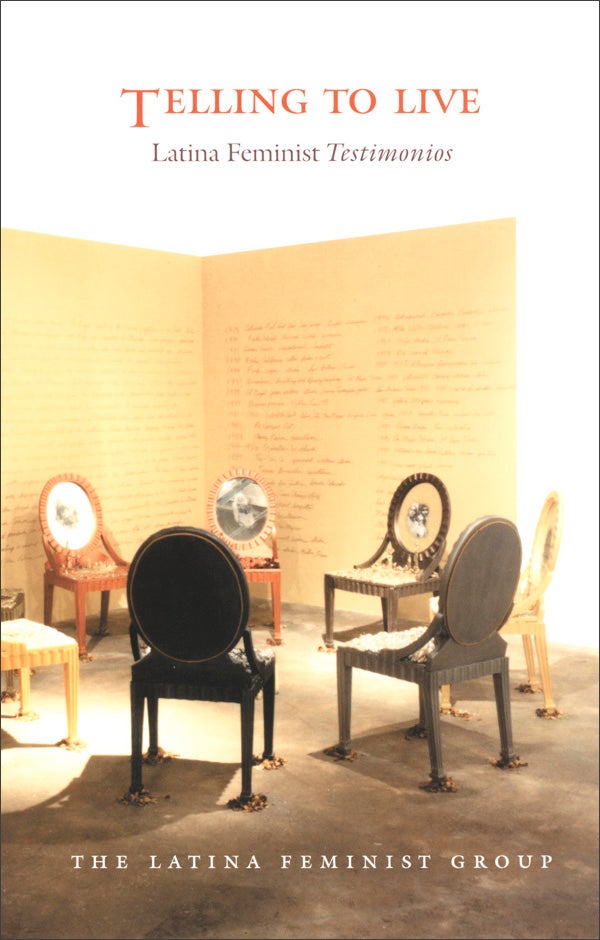
The catalogue ISBN identifies the Everyman’s Library edition published on 7 January 2025; the work’s original year is 1929. Follow the English text to examine narration and argument. Read with Telling to Live for individual creative conditions alongside collaborative knowledge, and A Voice from the South for education, race and public judgment.
Hiratsuka Raichō’s In the Beginning, Woman Was the Sun offers another language of creative freedom: spiritual concentration and a women’s publishing institution. Domestic work’s dispersal of attention remains a difficulty there too. Comparing the texts shows different movements between inner capacity and material conditions, without assuming influence between the authors. A room or one’s own light still leaves a practical question: who sustains the surrounding life, and who can decide when interruption must stop?
The audio portrait of Gioconda Belli shows how creative conditions can also be lost. In the 2022 exile interview, an established public voice still longs for books at home and a stable workspace. This does not equate exile with domestic interference; it asks why expressive authority and material security need not arrive together. Finding a voice does not make its sustaining conditions impossible to take away.


Explore another medium
- Articles
In the Beginning, Woman Was the Sun
Hiratsuka Raichō
Hiratsuka connects women's creative freedom to spiritual attention, domestic work and a shared publishing institution, without resolving the tensions between them.
Women's Literature · Women's Writing - Podcasts
Gioconda Belli: Women in Literature
Angel Mazariegos Rivas
This Las Recias portrait asks how women become literary subjects, connecting Belli's bodily experience, political commitments and exile to the conditions of writing.
Women's Literature · Women's Writing
Continue through the issues
Reader responses
Readers' notes
Share your reading or add a thread worth following further.
Join the Discussion
Loading comments...
Support Us
If you find our content valuable, please consider supporting FemRes.