Anti-Sexual Violence · Screen
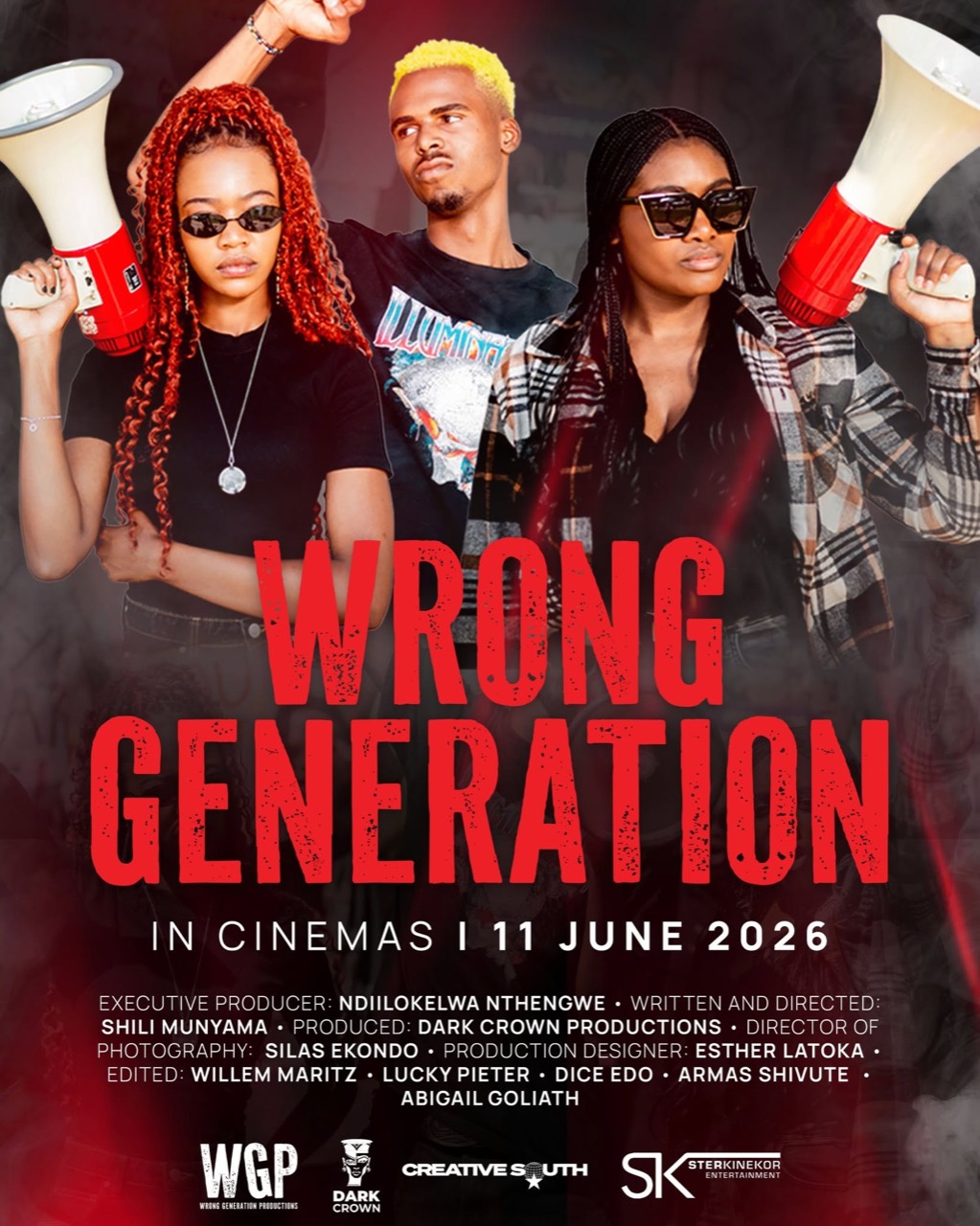
Wrong Generation
Shili Munyama’s Namibian drama turns estranged friends’ grief into collective protest, asking how a fictionalised movement connects gendered violence, public visibility and accountability.
- Director
- Shili Munyama
- Year
- 2026
- Region
- Namibia
- Duration
- 65 min
Reading the film
Public protest often appears as a crowd already united. Wrong Generation begins from estranged friends instead, making the work of reconnecting part of the political story. The official synopsis describes their reunion after a series of murders, including that of a childhood companion. Shili Munyama’s Namibian drama asks how private loss becomes a collective demand. Its feminist interest is not only the visibility of resistance, but the relationships and decisions through which people can act together after gendered violence.
Executive producer Ndiilokelwa Nthengwe’s Mandela Rhodes Foundation account records the Windhoek premiere on June 11, 2026 and the subsequent cinema run. The Vancouver Black Independent Film Festival listing confirms the same director, English language, Namibian production and 65-minute runtime. Nthengwe distinguishes the film’s fictionalization from the October2020 #ShutItAllDown protests that inspired it. A dramatic work can engage a movement without becoming a documentary record of everything that movement did.
Grief does not automatically create unity
Estrangement matters as a starting condition. Shared grief is not proof of identical needs, memories or political commitments. Reconnecting requires deciding whose experience will be heard and which differences can remain inside a common demand. The synopsis makes friendship a site of political work rather than simply the warm background to a protest.
This lens complicates the idea that violence naturally produces solidarity. It can also isolate, exhaust or frighten people. A movement’s capacity to gather is therefore an achievement, not an inevitable reaction. Reading for the labor of reconnection gives space to participation that is hesitant, partial or changing, instead of treating the most public voice as the measure of everyone’s courage.
Fiction can offer proximity without owning history
In her account, Nthengwe describes placing audiences inside young people’s lives as they navigate pain, institutional failure and collective action. Dramatization can make political conditions felt through relationships, but emotional proximity does not authorize a viewer to treat invented characters as representative evidence about every participant.
A useful question is how an adaptation distributes attention. Whose losses organize the story, whose actions become visible and which disagreements can survive the movement’s transformation into cinema? These questions do not presume a particular answer or invent missing scenes. They keep a fictional narrative from replacing the plural histories of the people whose organizing made its subject possible.
A protest seeks more than recognition
Gender Links’ discussion frames the film as a prompt for dialogue and solidarity against gender-based violence. That gives it a public use beyond the cinema. Yet recognition and accountability are distinct outcomes. Being seen can widen a demand’s audience while leaving the institutions addressed by it unchanged.
The film’s collective premise invites attention to that gap. Does public grief become a request for sympathy, or a challenge to who controls safety, credibility and response? A feminist interpretation should resist reducing a movement to an inspiring image of young people finding their voices. The political stakes include whether those voices can alter the conditions that made protest necessary.
Who gets to tell the movement?
The official credits distinguish Munyama’s writing and direction from Nthengwe’s executive production. Preserving that distinction matters: an advocate’s account of a project is an important situated voice, not the only voice behind the film. Naming several kinds of work prevents authorship from collapsing into a single public personality.
Follow the relation between friendship, mourning and a demand that exceeds any one person’s loss. The film can open a conversation about Namibia’s specific organizing history without turning it into a universal script for women’s resistance. Its strongest reading question is what people must build together so that surviving violence does not remain an isolated person’s responsibility.


Reader responses
Discussion
Share your response and continue the reading together.
Join the Discussion
Loading comments...
Support Us
If you find our content valuable, please consider supporting FemRes.