Who sustains a revolution?
Beginning with a woman searching for her husband in Sambizanga, we follow the messages, care and organizing that sustain resistance. Across anticolonial struggle, labor and solidarity, who carries a revolution’s daily work—and who is left outside its promise of liberation?

In this issue
30 items
Books9

Books · Feb 1983
Women, Race, & Class
Angela DavisAnalyzes the history of the American women's movement from a historical materialist perspective, revealing the interconnections of racial, class, and gender oppression.
02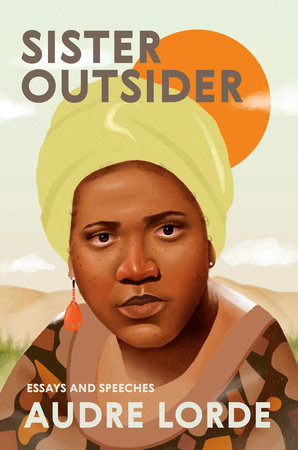
Books · Aug 2007
Sister Outsider: Essays and Speeches
Audre LordeA foundational work of intersectional feminist theory. Through fifteen essays and speeches, Lorde explores the intersectional oppression of race, gender, class, and sexuality, creating a revolutionary theoretical framework for understanding multiple identities.
03
Books · Feb 2016
Freedom Is a Constant Struggle
Angela DavisConnecting liberation movements across different eras and regions, from abolitionism to Palestine, demonstrating the importance of intersectional analysis in contemporary social movements.
04
Books · Feb 2003
Feminism without Borders
Chandra Talpade MohantyChandra Talpade Mohanty moves from a critique of the Western gaze to anticapitalist solidarity, grounding transnational feminism in history, labor relations, and shared struggle.
05
Books · Jun 1997
African Feminism
Gwendolyn Mikell (ed.)A 1997 anthology maps law, labor, care, and political organizing across ten African country cases - and opens a debate about how African feminisms are defined.
06
Books · Aug 1995
Beyond the Masks: Race, Gender and Subjectivity
Amina MamaAmina Mama traces how psychology helped construct the racialised ‘Other’, then develops a Black feminist account of subjectivity through the histories, conversations and relationships of Black women in Britain.
07
Books · Jan 2012
Borderlands/La Frontera: The New Mestiza
Gloria AnzaldúaAnzaldúa writes across languages and borders to examine how mestiza consciousness challenges fixed identities and exclusionary forms of belonging.
08
Books · Oct 2018
Care Work: Dreaming Disability Justice
Leah Lakshmi Piepzna-SamarasinhaLeah Lakshmi Piepzna-Samarasinha frames disability justice as practical knowledge from sick and disabled queer, trans, Black, and brown communities, centering collective access, care webs, and liberation where no one is left behind.
09
Books · Apr 2003
Pilgrimages/Peregrinajes
María LugonesMaría Lugones develops coalition as a situated practice: remembering plural selves, reading resistance across social worlds, and changing the relations that make oppression seem inescapable.
Films7
Films · Jan 1972
Sambizanga
Sarah MaldororSarah Maldoror follows Maria as she searches for her husband in colonial Angola, making women’s movement, care and communication part of the infrastructure of anticolonial resistance.
02
Films · Jul 2021
A Night of Knowing Nothing
Payal KapadiaPayal Kapadia combines fictional love letters, student protest footage, and archival fragments to connect caste-separated intimacy with the remaking of Indian universities under nationalist power.
03
Films · Sep 2019
Made in Bangladesh
Rubaiyat HossainRubaiyat Hossain follows a Dhaka garment worker organizing a union, connecting global fashion’s low prices to women’s labor, marital power, and the risks of collective action.
04
Films · Jan 2004
Moolaadé
Ousmane SembèneFour girls threatened with cutting seek sanctuary from Collé, turning one courtyard into a conflict over women’s authority, collective resistance, and the power to redefine tradition.
05
Films · Jan 2021
Writing with Fire
Rintu Thomas & Sushmit GhoshThis documentary follows the Dalit women journalists of Khabar Lahariya as they move from print to smartphones, turning reporting into a practice of anti-caste feminist authority.
06
Films · Oct 2019
Papicha
Mounia MeddourDuring Algeria’s Black Decade, a student turns fashion into collective defiance as armed fundamentalism closes public space around women’s bodies, education, and friendship.
07
Films · Sep 2015
3000 Nights
3000 LaylaMai MasriMai Masri’s prison drama follows a Palestinian teacher who gives birth in Israeli custody, locating motherhood, collective resistance, and political imprisonment within the same carceral space.
Videos4

Videos · Nov 2016
The Urgency of Intersectionality
Kimberlé CrenshawThrough an employment discrimination case and the public memory of police violence, Kimberlé Crenshaw shows how Black women disappear when race and gender are examined separately.
02
Videos · Mar 2023
Collective care is the work
Janey Starling & Seyi Falodun-LiburdDrawing on Black feminist and disability-justice traditions, two Level Up organizers define collective care as movement infrastructure rather than a benefit added after political work.
03
Videos · Mar 2012
Unlock the Intelligence, Passion, Greatness of Girls
Leymah GboweeLiberian peace activist Leymah Gbowee argues that girls do not need abstract praise but sustained investment, truthful education, and adults willing to transfer opportunity and power.
04
Videos · Jan 2017
If a Story Moves You, Act on It
Sisonke MsimangSisonke Msimang challenges the comforting belief that empathy produced by storytelling is itself political action, asking audiences to reconnect narrative with facts, plans, and collective responsibility.
Podcasts2

Podcasts · Sep 2025
The Gender at Work Podcast
Aruna Rao & Joanne SandlerThe Gender at Work Podcast is hosted by Aruna Rao and Joanne Sandler, featuring conversations with global feminist activists, scholars, and community practitioners. The show takes a critical perspective exploring issues of love, policy, war, and cross-cultural alliances, emphasizing the intersection of decolonization, anti-militarization, and emotional politics.
02
Podcasts · May 2024
Land and Indigenous Feminist Resurgences
Lydia Ayame Hiraide, Leanne Betasamosake SimpsonThis FCRJ episode features Leanne Betasamosake Simpson on Indigenous resistance across Turtle Island, land, transnational organizing, solidarity, and resurgence strategies, connecting Indigenous feminism with land politics and anti-colonial practice.
Articles4
Articles · Jan 1979
The Combahee River Collective Statement
Combahee River CollectiveHow the Combahee River Collective connected Black women’s lived experience to interlocking structures of race, gender, sexuality, and class - and made self-definition a collective politics of liberation and coalition.
02Articles · Sep 2010
The Charter of Feminist Principles for African Feminists
African Feminist ForumAdopted in Accra in 2006, the Charter links bodily autonomy and material rights to feminist organizations’ accountability and shared leadership.
03Articles · May 1912
Women’s Suffrage and Class Struggle
Rosa LuxemburgIn this 1912 socialist address, Rosa Luxemburg argues that women’s suffrage is a working-class demand and exposes how wage-based definitions of productivity erase unpaid labor.
04Articles · Oct 1904
An Address to Two Hundred Million Fellow Countrywomen
Qiu JinIn this 1904 address, Qiu Jin links footbinding, marriage, education and women’s self-reliance to late-Qing politics, while exposing the tension between national renewal and women’s freedom.
Papers4
Papers · Jan 1984
Under Western Eyes: Feminist Scholarship and Colonial Discourses
Chandra Talpade MohantyThis groundbreaking article critiques Western feminism's discursive construction of 'Third World women,' revealing colonialist tendencies in feminist scholarship. Mohanty demonstrates how Western feminism homogenizes non-Western women as victims, ignoring their agency and diversity, laying the foundation for transnational and decolonial feminist theory.
02Papers · Jan 2004
Nego-Feminism: Theorizing, Practicing, and Pruning Africa’s Way
Obioma NnaemekaObioma Nnaemeka’s 2004 essay links nego-feminism to who makes theory, controls research, and defines culture. Its examples show negotiation as situated practice - not a universal rule for African women.
03Papers · Apr 2005
Native American Feminism, Sovereignty, and Social Change
Andrea SmithAndrea Smith’s 2005 essay challenges the feminist/nonfeminist binary and asks how Native women’s diverse political frameworks make sovereignty central to debates about gender justice.
04Papers · Jan 1989
Demarginalizing the Intersection of Race and Sex: A Black Feminist Critique of Antidiscrimination Doctrine, Feminist Theory and Antiracist Politics
Kimberlé Williams CrenshawCrenshaw's groundbreaking 1989 paper that introduced the 'intersectionality' framework, revealing how Black women are marginalized in antidiscrimination law and feminist movements.