Does punishment make us safer?
Beginning with Abolition. Feminism. Now., this issue moves between gender violence, policing, imprisonment and community accountability to ask: when the state promises safety through punishment, who becomes easier to surveil, criminalize and abandon? Can feminism imagine justice as supporting survivors, interrupting harm and changing the conditions that produce violence—not merely building larger cages?

In this issue
30 items
Books9
Books · Jan 2022
Abolition. Feminism. Now.
Angela Y. Davis, Gina Dent, Erica R. Meiners, Beth E. RichieThis collaborative work traces abolition feminism through women-of-color, queer, anti-capitalist, internationalist movement histories.
02
Books · Feb 2021
We Do This ’Til We Free Us
Mariame KabaMariame Kaba’s essays and interviews connect abolitionist organizing with the collective work of building conditions for safety and freedom.
03
Books · Aug 2022
No More Police: A Case for Abolition
Mariame Kaba, Andrea J. RitchieNo More Police reframes safety by taking it out of punishment infrastructure and into care, survivor support, and social redesign, advancing abolitionist feminist and transformative justice frameworks.
04
Books · Aug 2016
Color of Violence: The INCITE! Anthology
INCITE! Women of Color Against ViolenceINCITE! centers women of color to connect interpersonal violence with policing, colonialism, militarism, and reproductive control.
05
Books · Jan 2020
Beyond Survival
Ejeris Dixon, Leah Lakshmi Piepzna-SamarasinhaOrganizers share tools and experiences of transformative justice, addressing harm and accountability without relying on police or prisons.
06
Books · Mar 2019
Until We Reckon
Danielle SeredDanielle Sered explores responses to serious violence that center survivors’ needs, require accountability, and pursue repair beyond prison.
07
Books · Sep 2015
Captive Genders
Eric A. Stanley, Nat SmithTrans and queer accounts expose how policing and prisons enforce gender binaries, linking gender liberation with prison abolition.
08
Books · May 2020
Decarcerating Disability
Liat Ben-MosheLiat Ben-Moshe connects deinstitutionalization with prison abolition, challenging the claim that closing institutions caused mass incarceration.
09
Books · Aug 2016
The Revolution Starts at Home
Ching-In Chen, Jai Dulani, Leah Lakshmi Piepzna-SamarasinhaA landmark collection by survivors, organizers, and community workers asking how social justice movements can confront intimate violence and build accountability without relying on police and prisons.
Films7

Films · Dec 2022
Women Talking
Sarah PolleyA drama film written and directed by Sarah Polley, adapted from Miriam Toews' novel of the same name. Set in a Bolivian Mennonite community, following a group of women who gather to discuss their future after discovering systematic sexual assault by men in their community. The film deeply explores important issues including religious patriarchy critique, collective trauma and healing, women's political awakening, and the power of silence versus voice.
02
Films · Jan 2004
Moolaadé
Ousmane SembèneFour girls threatened with cutting seek sanctuary from Collé, turning one courtyard into a conflict over women’s authority, collective resistance, and the power to redefine tradition.
03
Films · Sep 2017
Angels Wear White
嘉年华Vivian QuVivian Qu’s Angels Wear White traces how Mia’s precarious work, two girls’ different family responses and attorney Hao’s support shape who can testify and find safety.
04
Films · May 2024
On Becoming a Guinea Fowl
Rungano NyoniA black comedy drama directed by Zambian filmmaker Rungano Nyoni, starring Susan Chardy. Following young woman Shula who discovers her uncle Fred's body late at night, the film explores the revelation of buried family sexual assault secrets during funeral proceedings with her cousins. With its unique African perspective, the film examines the complex relationships between family trauma, cultural traditions, and women's voices, becoming an important representative work of contemporary African feminist cinema.
05
Films · Oct 2018
The Hate U Give
George Tillman Jr.Adapted from Angie Thomas's bestselling novel, follows 16-year-old African American girl Starr's journey from silence to voice after witnessing her friend Khalil being shot by police. This coming-of-age drama deeply explores police violence, systemic racism, Black women's voices and agency, and young women's awakening and growth in social justice movements.
06
Films · Dec 2020
Promising Young Woman
Emerald FennellA bold and provocative thriller that confronts rape culture through the story of Cassie, a woman seeking justice for her best friend's assault. This Academy Award-winning film challenges audiences to examine complicity, consent, and the systems that protect predators.
07
Films · Sep 2015
3000 Nights
3000 LaylaMai MasriMai Masri’s prison drama follows a Palestinian teacher who gives birth in Israeli custody, locating motherhood, collective resistance, and political imprisonment within the same carceral space.
Videos3

Videos · Aug 2017
How Pakistani Women Are Taking the Internet Back
Nighat DadNighat Dad explains why access to the internet is inseparable from women’s freedom and how Pakistan’s cyber-harassment helpline turns digital rights into practical support and collective evidence.
02
Videos · Jul 2015
A Warrior’s Cry Against Child Marriage
Memory BandaMalawian activist Memory Banda connects one girl’s refusal to collective organizing, local bylaws, and national legal reform against child marriage and coercive initiation practices.
03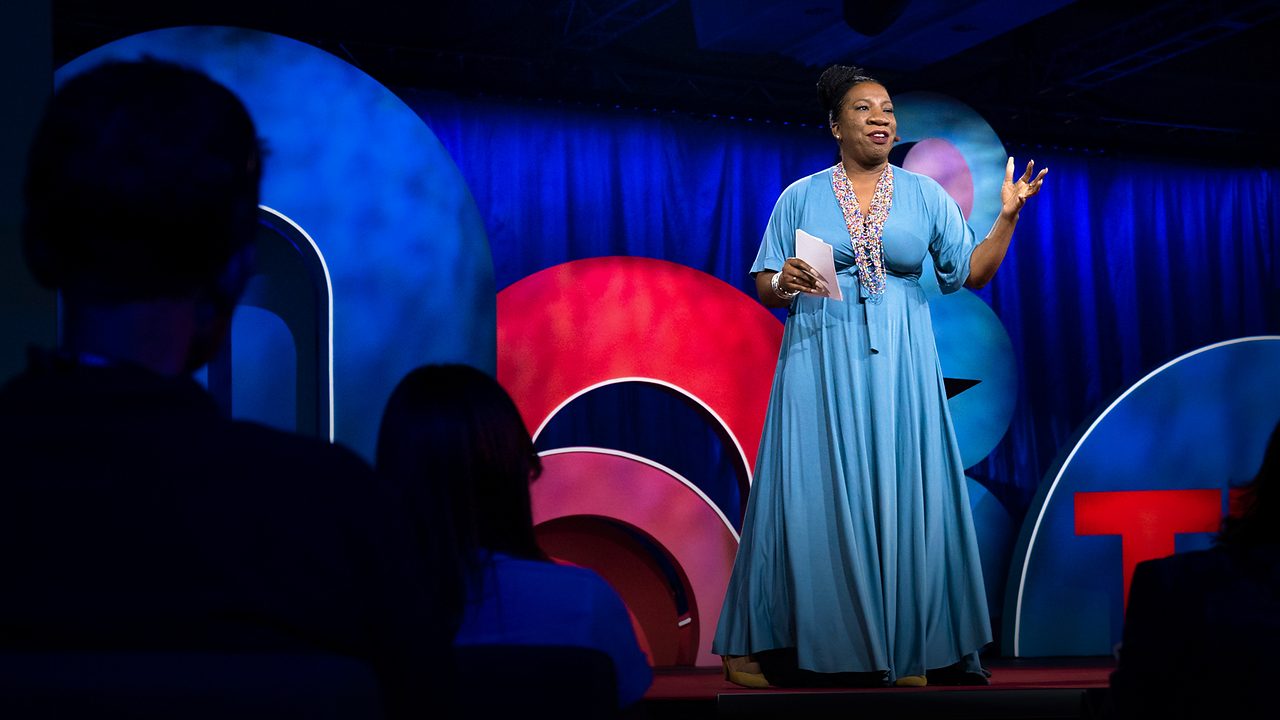
Videos · Nov 2018
Me Too is a movement, not a moment
Tarana BurkeTarana Burke traces Me Too from community organizing in 2006 to the global hashtag, centering survivor support, care after trauma and work beyond the media cycle.
Podcasts2

Podcasts · Sep 2025
en(gender)ed
Teri Yuanen(gender)ed is a podcast hosted by Teri Yuan, focusing on gender violence, oppression mechanisms, and institutional solutions. The show centers on the voices of survivors, advocates, and policymakers, exploring issues such as coercive control, domestic violence, campus sexual assault, gun violence, and media bias, emphasizing intersectional perspectives and cultural literacy. With a profound, systematic style, it serves as an important knowledge platform in the field of gender justice.
02
Podcasts · Sep 2025
Feminist Sleeper Cell
Abortion Access ForceFeminist Sleeper Cell is a podcast produced by Abortion Access Force, focusing on the latest developments in America's abortion rights crisis and anti-gender politics. Hosts Lizz Winstead, Moji Alawode-El, and Marie Khan respond to Supreme Court decisions, anti-abortion organizational actions, misogynistic structures in healthcare systems, and Black women's health issues with satire, anger, and critical humor. With a radical, information-dense style, it represents a frontline voice in American abortion rights advocacy.
Articles3
Articles · Jul 2011
The VAMP/SANGRAM Sex Workers’ Movement
SANGRAM/VAMP TeamThis movement case study shows how sex workers in southwest India built collective leadership, challenged police violence and rescue politics, and forced feminist organizations to confront their own moral boundaries.
02Articles · Jan 2020
Violence and Discrimination against Women and Girls in Latin America and the Caribbean
Inter-American Commission on Human RightsA regional human-rights assessment of the gap between laws and lived protection, with specific attention to girls, reproductive rights, disappearances, femicide, and intersecting discrimination.
03Articles · Dec 2024
Reproductive Rights and Digital Rights: EFF’s 2024 Review
Daly BarnettDaly Barnett reviews EFF’s work on location-data markets, licence-plate surveillance and reproductive privacy in 2024.
Papers6
Papers · May 2018
From Carceral Feminism to Transformative Justice
From Carceral Feminism to Transformative Justice: Women-of-Color Feminism and Alternatives to IncarcerationMimi E. KimMimi E. Kim traces how U.S. feminist anti-violence politics became entangled with criminalization - and how women-of-color feminist movements developed restorative and transformative alternatives.
02Papers · May 2019
The Carceral Creep
The Carceral Creep: Gender-Based Violence, Race, and the Expansion of the Punitive State, 1973-1983Mimi E. KimUsing the U.S. anti-domestic-violence movement of 1973 - 1983, Mimi E. Kim traces how collaboration with law enforcement reshaped movement autonomy and how gendered, racialized, and classed narratives legitimated punitive policy.
03Papers · Jul 1991
Mapping the Margins: Intersectionality, Identity Politics, and Violence Against Women of Color
Kimberlé CrenshawThis groundbreaking 1991 article systematically articulates intersectionality theory, analyzing how race, gender, and other identity dimensions interact to shape the unique experiences of violence faced by women of color. Crenshaw critiques how anti-discrimination law and feminist movements fail to adequately address multiply-marginalized groups, calling for more inclusive frameworks of social justice.
04Papers · Dec 2007
The Sexual Politics of the New Abolitionism
Elizabeth BernsteinA key article on how anti-trafficking politics links sexuality, markets, morality, and punitive state power.
05Papers · Oct 2023
The Feminization of Resistance: The Narratives of #NiUnaMenos as Social Transformative Action
Maria Clara MedinaA narrative study of Ni Una Menos as more than a protest against femicide: a plural political practice seeking to transform precarious life, relationships, knowledge, and solidarity.
06Papers · Mar 2016
Ending Violence against Women in Latin America: Feminist Norm Setting in a Multilevel Context
Conny RoggebandA study of feminist norm-making from resistance under dictatorship to the Belém do Pará Convention, focused on the persistent gap between regional commitments and state practice.