FemRes · Research index
Search
Trace a concept across books, moving images, essays, voices, and feminist research.
- 1092
- Discover feminist resources in 1092 curated items
- 291
- All topics
Browse by medium
Refine
Search results
1092 items
Marriage
Caird’s 1888 essay refuses to treat women’s constrained circumstances as proof of nature, asking how dependence and compulsory union distort equal intimacy.
- Family Liberation
- Marriage Critique
- Women's Economic Rights
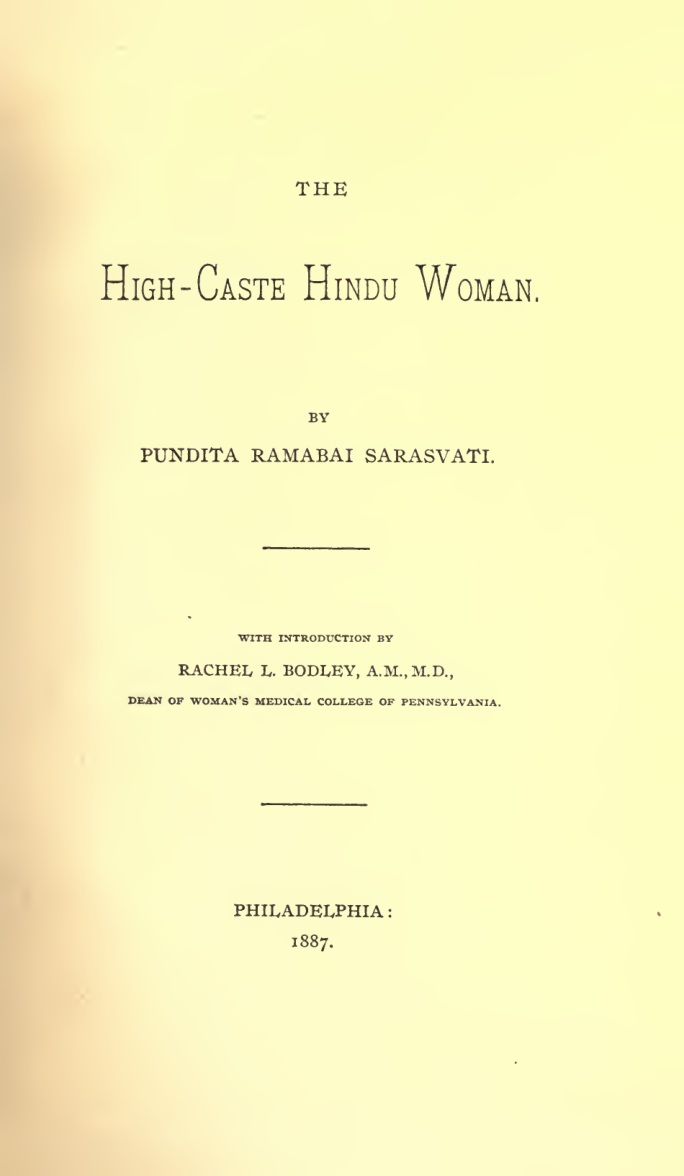
The High-Caste Hindu Woman
Published in Philadelphia in 1887, Pandita Ramabai's English-language book examines childhood, marriage, and widowhood for high-caste Hindu women, and makes self-reliance, education, and locally grounded women teachers central to reform.
- Women's History
- Women's Rights
- Feminist Education
Social and Political Equality of Women and Men
Hubertine Auclert’s 1879 speech connects voting, education and domestic remuneration while rejecting promises of equality postponed until after revolution.
- Political Participation
- Labor Rights
- Social Movements
“We Are All Bound Up Together”: Rights Beyond the Ballot
At an 1866 women’s rights convention, Frances Ellen Watkins Harper argues that voting rights matter but cannot by themselves secure equality. Black women face racial and gendered exclusion at once, and cannot be told to wait.
- Black Feminism
- Historical Feminism
- Women's Rights

Incidents in the Life of a Slave Girl, Written by Herself
Writing as Linda Brent, Harriet Jacobs shows how slavery governed Black women's bodies, motherhood, and family - and how concealment, labor, and authorship became means of survival and testimony.
- Women's History
- Black Feminism
- Race and Gender
Address at the Woman’s Rights Convention, Akron (1851)
Truth argues through labor, measuring cups and scripture; the differing 1851 and 1863 accounts also expose power over the public voice of Black women.
- Black Feminism
- Race and Gender
- Women's Rights

The Narrative of Sojourner Truth
This 1850 dictated narrative follows Truth’s escape from slavery in New York, her pursuit of a son illegally sold south, and her efforts to claim authority through religious interpretation and public speech.
- Women's History
- Black Feminism
- Race and Gender
Declaration of Sentiments
The 1848 declaration links marriage, wages, voting and sexual morality, while revealing hierarchies that persist within the language of universal rights.
- Historical Feminism
- Women's Rights
- Legal Equality
‘Why Sit Ye Here and Die?’ / ‘Lecture Delivered at Franklin Hall’: Knowledge, Work and Black Women’s Speech
In an 1832 Boston address, Maria W. Stewart uses Christian rhetoric to call Black women and men toward learning and public participation while exposing how racialized labour restricts Black women’s opportunities.
- Black Feminism
- Historical Feminism
- Education Equality

A Vindication of the Rights of Woman
Wollstonecraft links girls’ education to reason, virtue, sexual morality, and political participation, challenging the social training that makes women’s dependence appear natural.
- First Wave Feminism
- Education Equality
- Legal Equality
Déclaration des droits de la femme et de la citoyenne: Making the Exclusion in Universal Rights Visible
Olympe de Gouges recasts revolutionary rights language in 1791 to ask why women remain outside citizenship, public speech and legal equality. This reading follows the declaration’s form and its historical limits.
- Women's Rights
- Citizenship
- Political Participation
Respuesta a Sor Filotea de la Cruz: Learning, the Convent and Women’s Intellectual Authority
In her 1691 reply to Sor Filotea, Sor Juana uses autobiography, theology and classical learning to defend women’s study. This reading keeps the convent setting, her elite position and the argument’s limits in view.
- Historical Feminism
- Women's Literature
- Education Equality