Black Feminism · Screening
The Urgency of Intersectionality
Through an employment discrimination case and the public memory of police violence, Kimberlé Crenshaw shows how Black women disappear when race and gender are examined separately.
Screening notes
Kimberlé Crenshaw turns a theoretical question into an exercise in seeing and listening: what happens when race and gender are treated as separate concerns? She uses Emma DeGraffenreid’s employment discrimination case to show the consequences. The court considered race discrimination and sex discrimination separately, looking for Black men and white women as comparison groups. Black women as a distinct position could not fit either single-axis account. Their experience was not absent; the available frame made it difficult to recognize on its own terms.
The talk’s central point is not to add more labels to identity. It is to show how institutions classify evidence, distribute attention and decide which injuries count as public problems. An analysis that asks only “Is this race or gender?” can make power operating through both vanish in legal reasoning and reporting. Crenshaw carries the question from the courtroom to the public memory of women subjected to police violence. When stories are narrowed to a presumed representative victim, Black women’s experiences are less likely to become visible, mournable and politically accountable. #SayHerName is therefore more than an expanded list: it asks the public to examine how a list is made and whom it leaves out.
Crenshaw’s delivery has the compressed rhythm of a TED talk and includes a musical collaboration with Abby Dobson. Story, image and rhythm make legal categorization felt: a name can be heard without its person being fully seen. This form makes theory accessible to a broad audience, but an eighteen-minute talk cannot replace a longer legal, scholarly and organizing history, nor does it offer a complete definition of intersectionality. The listener still has to ask what changes after a story becomes visible: who alters institutional practice, and how should data collection, policing, employment and media narratives change? Public witnessing matters, but it cannot substitute for changes in resources, law and organizational power.
Continue with Crenshaw’s 1989 paper “Demarginalizing the Intersection of Race and Sex.” That article develops the critique through legal argument, while the TED talk uses a short public narrative to demonstrate what a single-axis frame can do. They illuminate one another but are not interchangeable versions. After watching, test your own reading with a concrete question: when a form or dataset allows only one identity to explain an experience, whose account gets pushed outside the frame?
Talk and further reading
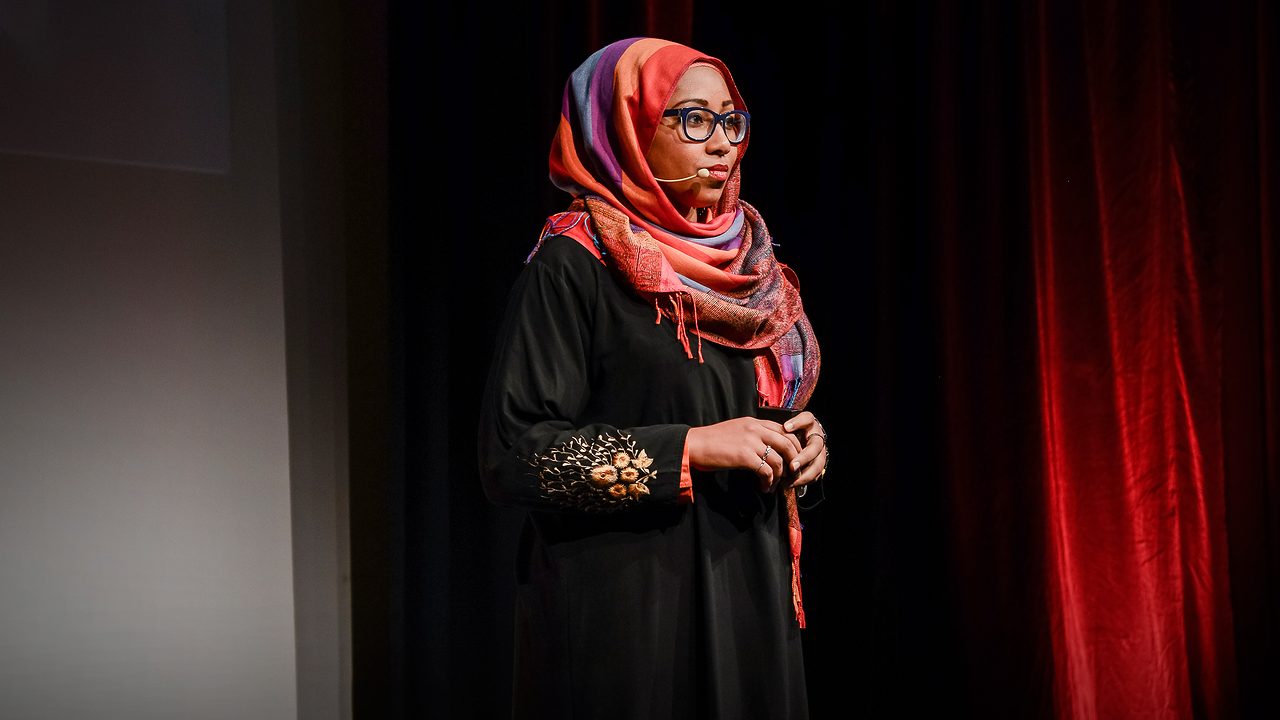
What does my headscarf mean to you?
Yassmin Abdel-Magied / 13:52
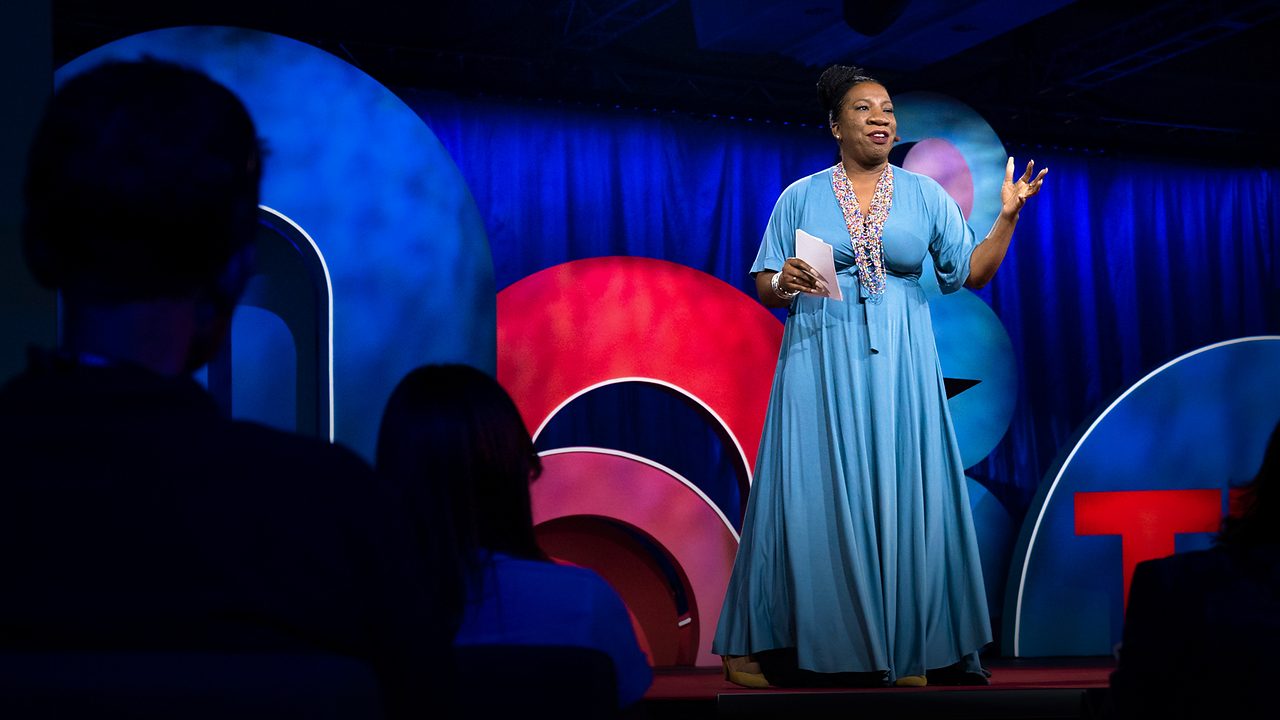
Me Too is a movement, not a moment
Tarana Burke / 16:05

How I’m Fighting Bias in Algorithms
Joy Buolamwini / 8:34

I Got 99 Problems... Palsy Is Just One
Maysoon Zayid / 14:13
Explore another medium
- Papers
Demarginalizing the Intersection of Race and Sex: A Black Feminist Critique of Antidiscrimination Doctrine, Feminist Theory and Antiracist Politics
Kimberlé Williams Crenshaw
Crenshaw's groundbreaking 1989 paper that introduced the 'intersectionality' framework, revealing how Black women are marginalized in antidiscrimination law and feminist movements.
Black Feminism · Intersectional Feminism - Books
Women, Race, & Class
Angela Davis
Analyzes the history of the American women's movement from a historical materialist perspective, revealing the interconnections of racial, class, and gender oppression.
Black Feminism · Intersectional Feminism
Continue through the issues
Included in · No. 08
Who sustains a revolution?
Beginning with a woman searching for her husband in Sambizanga, we follow the messages, care and organizing that sustain resistance. Across anticolonial struggle, labor and solidarity, who carries a revolution’s daily work—and who is left outside its promise of liberation?
Related theme · No. 07
Why must she be likeable?
Beginning with Unlikeable Female Characters, we revisit women who are angry, desirous, and unwilling to comply. Who sets the terms of likability—and when does rebellion reproduce someone else’s oppression?
Media Representation Critique
Reader responses
After the screening
Share your response or add another moving-image thread worth following.
Join the Discussion
Loading comments...
Support Us
If you find our content valuable, please consider supporting FemRes.