Education Equality · Screening
How Students of Color Confront Impostor Syndrome
Dena Simmons connects schooling to the pressure to edit oneself, asking whether educational safety includes respect for language, bodies and identity.
Screening notes
Dena Simmons’s talk shifts impostor syndrome from a private deficit of confidence to the ways schools make students question their belonging. A scholarship takes her from the Bronx to a boarding school and greater physical safety, but also another insecurity: becoming acceptable by editing herself.
She recalls a teacher publicly correcting her pronunciation of asking, a classmate’s disgust at her hair products, and someone watching valuables when she enters a room. Language, hair and bodily presence become racialized and classed evidence. Harm does not require academic failure; doctoral credentials and professional success do not automatically dissolve the feeling of being a token or exception.
As a Black woman, Simmons also describes monitoring whether speaking firmly will be reduced to anger. Returning to teach in the Bronx, she centers students’ lives, histories and identities. The responsibility moves from students adapting better to schools providing conditions of learning that do not demand self-erasure.
The first-person form lets small scenes accumulate, but it is not a national causal study. A loving classroom cannot substitute for housing, food or social protection; Simmons acknowledges limits to what she could control. Respect for identity and academic achievement should not become opposing choices.
Goldman’s The Child and Its Enemies offers a historical critique of adult educational authority. Research on children’s intellectual stereotypes examines labels and interests experimentally. Testimony, political argument and experiment retain different evidentiary boundaries while asking who can learn without erasing themselves.

The Beauty of Being a Misfit
Lidia Yuknavitch / 12:48

Woman: Global Women's Voices and Resilience
Yann Arthus-Bertrand & Anastasia Mikova / 1:47:00

This isn't her mother's feminism
Courtney E. Martin / 11:09
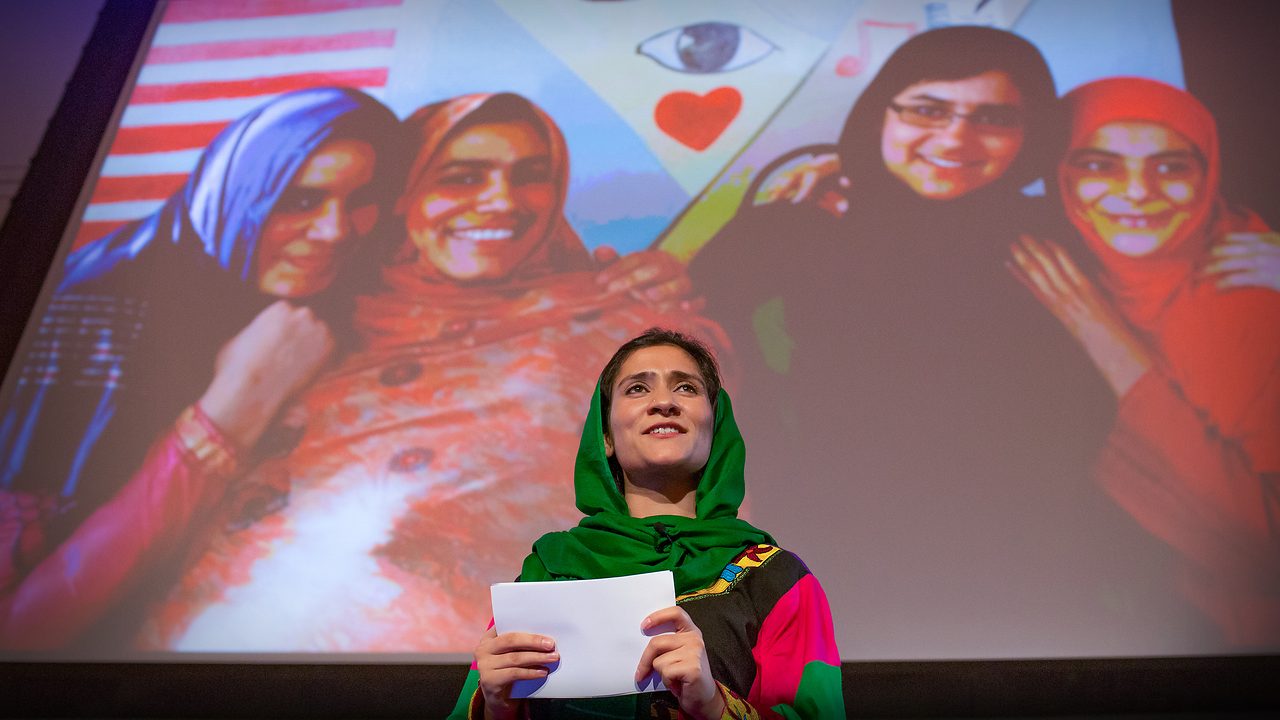
Dare to educate Afghan girls
Shabana Basij-Rasikh / 9:19
Explore another medium
- Articles
The Child and Its Enemies
Emma Goldman
Goldman challenges families, schools and radical parents who reproduce their beliefs through children, asking what freedom requires of adult authority and care.
Education Equality - Papers
Gender Stereotypes About Intellectual Ability
Lin Bian; Sarah-Jane Leslie; Andrei Cimpian
Four studies distinguish children’s ideas about brilliance, grades and effort, showing how labels can shape interest while leaving later outcomes open.
Continue through the issues
Reader responses
After the screening
Share your response or add another moving-image thread worth following.
Join the Discussion
Loading comments...
Support Us
If you find our content valuable, please consider supporting FemRes.