Intersectional Feminism · Screening
What does my headscarf mean to you?
Engineer and writer Yassmin Abdel-Magied uses the assumptions attached to a headscarf to ask why visible religious dress is treated as a complete explanation of a Muslim woman's life.
Screening notes
Yassmin Abdel-Magied opens with a deceptively simple question: when you see her headscarf, what kind of life do you imagine for her? The talk asks listeners to notice how quickly a visible garment becomes a judgment about ability, faith, obedience, or modernity. She brings those assumptions into contact with her own experience as a mechanical engineer and member of a motorsport engineering team. The point, however, is not simply to prove that “a woman who wears a headscarf can succeed”; that can leave existing measures of achievement unquestioned.
The deeper question is why one visible item of clothing is asked to carry so much explanatory weight. Muslim women are often treated in public debate as symbols awaiting interpretation: a headscarf is presented as evidence of oppression, or demanded as proof of freely chosen identity. These opposing claims can both flatten the varied ways women understand faith, dress, and selfhood. Abdel-Magied explicitly resists reducing her talk to a debate about the headscarf alone. She is not claiming to speak for every wearer; she is showing how an observer’s imagination can overtake a person’s complexity before that person has spoken.
Beginning with how individuals look at one another is both the talk’s strength and its limit. Questioning stereotypes can loosen bias in everyday encounters. But if the answer stops at “get to know a Muslim woman,” structural discrimination slips into the background: who is considered professional in hiring, who is allowed to represent a community in the media, and who must repeatedly explain her faith remain questions of power in workplaces and public culture. A personal story can open a route to understanding; it should not become testimony Muslim women are expected to keep supplying in exchange for ordinary respect.
Abdel-Magied’s official biography documents her work as an engineer, writer, and public advocate. Those dimensions can widen an audience’s expectations, but they should not be assembled into an “exceptional” individual whose existence is supposed to disprove prejudice. A better reading lets her account remain one situated perspective rather than turning it into a universal Muslim women’s experience. Read it with Do Muslim Women Need Saving?: Lila Abu-Lughod’s critique of rescue narratives helps us ask who gets to define freedom for whom, and why visible clothing so often substitutes for a deeper political understanding.
Talk and further reading

2010s Pop Feminism: A Painful Look Back
Lily Alexandre / 1:12:04

Ali Wong: Baby Cobra
Ali Wong / 1:00:00

The Attitudes That Sparked the Arab Spring
Dalia Mogahed / 0:14
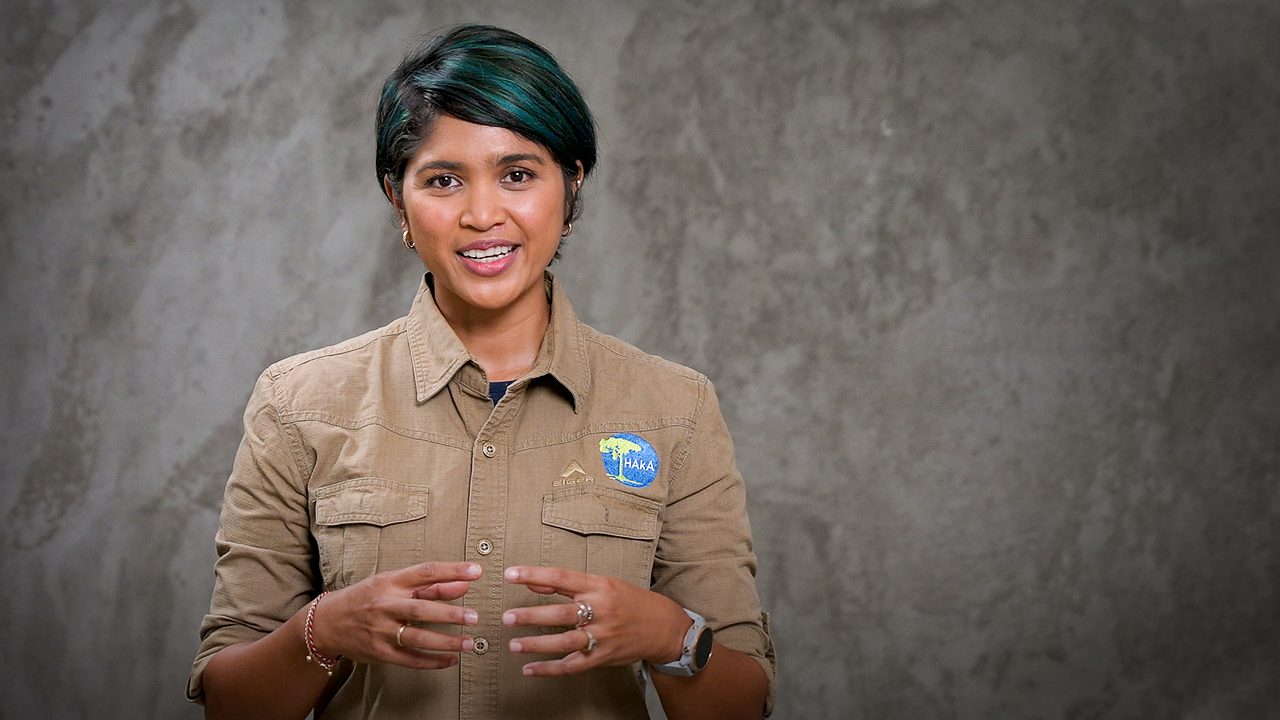
The powerful women on the front lines of climate action
Farwiza Farhan / 0:07
Reader responses
After the screening
Share your response or add another moving-image thread worth following.
Join the Discussion
Loading comments...
Support Us
If you find our content valuable, please consider supporting FemRes.