Data Justice
Explore curated feminist content about Data Justice
- 017
- 17 items
- 06
- Connection paths
Connection paths
Adjacent topics
Media composition
Read along this issue
17 · Data Justice
Books
View all
Books · Aug 2022
Atlas of AI
Kate CrawfordKate Crawford maps AI through minerals, energy, hidden labor, training data, classification, and state surveillance, revealing the extraction and concentrated power beneath machine intelligence.
02
Books · May 2021
Pollution Is Colonialism
Max LiboironMax Liboiron uses plastic pollution research to show how environmental science can presume access to land, while modeling anticolonial research ethics.
03
Books · Mar 2021
Your Computer Is on Fire
Thomas S. Mullaney, Benjamin Peters, Mar Hicks, and Kavita PhilipThis anthology reads computing through colonialism, gendered labor, corporate power, and material infrastructure, asking what sustains the cloud and whether coding alone can change tech’s inequalities.
04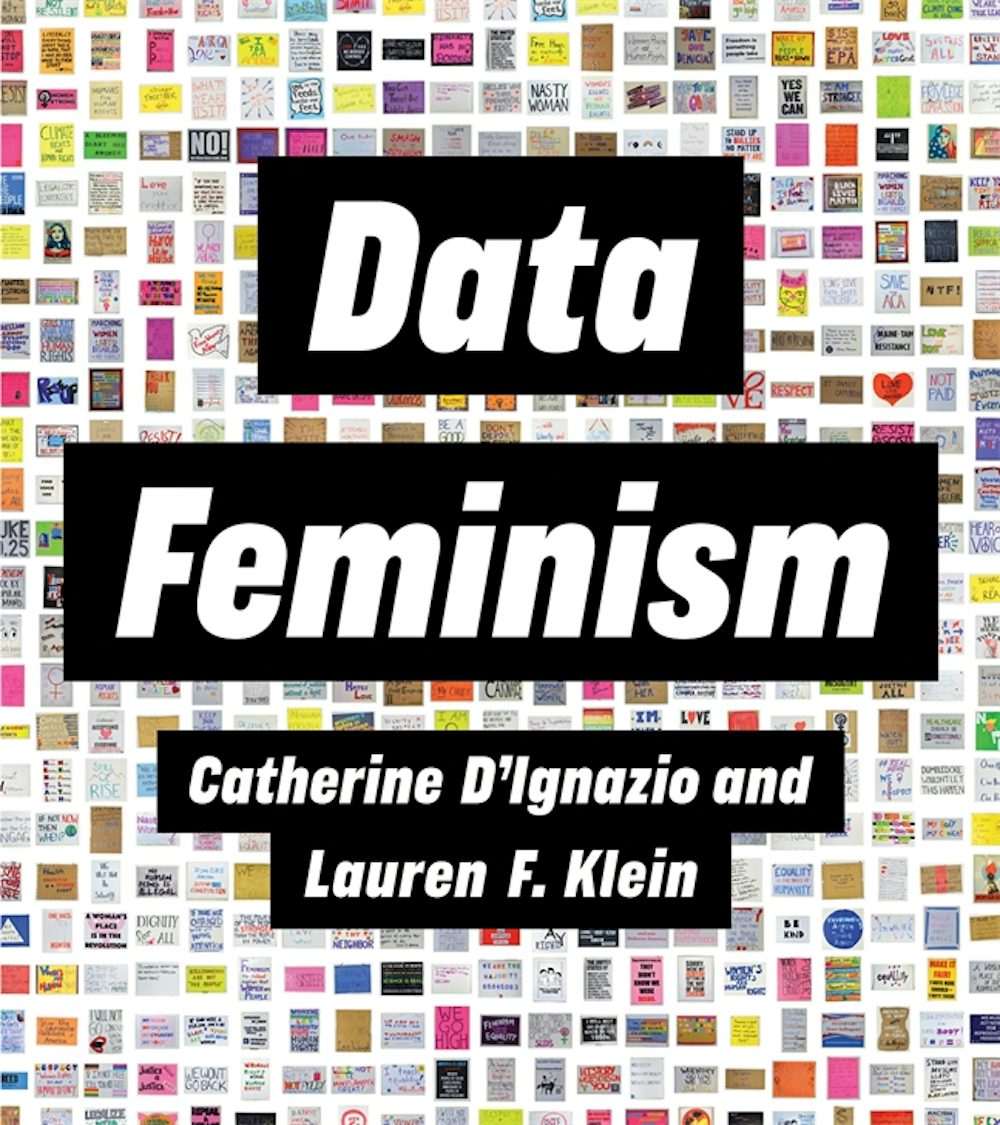
Books · Mar 2020
Data Feminism
Catherine D'Ignazio and Lauren F. KleinIt proposes seven practical principles that bring power analysis, intersectionality, situated knowledge, and co-design into data work itself.
05
Books · Mar 2020
Design Justice
Sasha Costanza-ChockStarting from trans airport screening and disability justice, Sasha Costanza-Chock argues for design led by affected communities, placing benefit, ownership, and accountability above expert good intentions.
06
Books · Jul 2019
Race After Technology
Ruha BenjaminRuha Benjamin’s New Jim Code framework shows how racial hierarchy can be engineered, hidden by defaults, intensified through surveillance, or repackaged as a benevolent technical fix.
Films

Videos

Articles
Articles · Oct 2022
Not My AI: A Feminist Framework to Challenge Public-Sector Algorithmic Decisions
Joana Varon and Paz PeñaThrough Latin American public-service cases, Joana Varon and Paz Peña ask who defines problems and bears the costs when algorithms allocate benefits or predict risk.
02Articles · Jan 2019
Feminist Data Manifest-No
Marika Cifor, Patricia Garcia, and collaboratorsThe Feminist Data Manifest-No pairs refusal with commitment, asking how data attaches to bodies, reproduces inequality and whether people can meaningfully say no.
03Articles · Aug 2016
Feminist Principles of the Internet - Version 2.0
Association for Progressive Communications (APC) and feminist contributorsAPC’s Feminist Principles of the Internet connect access, expression, privacy, consent and governance in one political framework for examining how technology distributes power.
Papers
Papers · Jun 2024
Data Feminism for AI
Lauren F. Klein and Catherine D'IgnazioKlein and D’Ignazio bring data feminism into AI research, using tenant screening, feminist data activism, and hidden annotation labor to examine power, consent, and environmental costs.
02Papers · Oct 2016
Feminist Data Visualization
Catherine D'Ignazio and Lauren F. KleinD’Ignazio and Klein turn feminist epistemology into questions for visualization design: how categories, visual form, participation, context, and labor shape whose knowledge becomes legible.