Disability Justice · Screening
My fight for disability rights
Ivorian lawyer Brigitte Mensah continues legal work and disability-rights advocacy after losing her sight, prompting questions about accessible voting, legal services and public institutions.
Screening notes
Brigitte Mensah’s French-language talk follows her professional life as a lawyer before and after an illness left her blind. She continued legal work and advocacy for disabled people’s rights. That change should not be packaged as a story of “overcoming disability.” It raises a more demanding institutional question: are legal documents readable, voting procedures usable and workplaces equipped with meaningful support? When these conditions are absent, “independence” can become a demand that individuals personally compensate for gaps in public systems.
The TED talk discusses her advocacy for disabled people’s right to vote. An earlier interview in Côte d’Ivoire records how, after losing her sight, she struggled to obtain usable legal materials and often needed other people to read documents aloud; it also conveys her criticism of disabled people being excluded from social life. These details make accessibility concrete. It shapes whether a lawyer can practice, whether a voter can understand the available choices, and whether a person can participate in public life without an intermediary speaking or acting in their place.
A feminist disability-justice lens holds Mensah’s professional expertise together with the reality of interdependence. Needing other people is not a reason to replace institutional responsibility with private goodwill; relying on a reader or relative should not be the condition for access to legal information. The talk uses personal experience to draw us in, but if we stop at courage and perseverance, we miss how systems produce barriers and who gets to decide whether a service is “accessible enough.”
Mensah’s advocacy reminds us that disabled people’s political participation means more than being invited to observe. It requires access to information, voting, making demands and shaping the rules themselves. To continue thinking about access and bodily autonomy through another woman’s experience, see Srishti Pandey’s talk on barriers in everyday life.
Talk and further reading

The work that makes all other work possible
Ai-jen Poo / 0:16
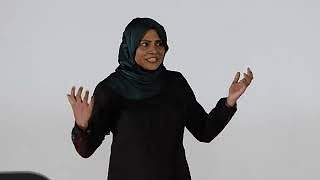
I Saw None, so I Built One: Women in the Tech Community
Aishath Adnan / 0:12

Why Autism Is Often Missed in Women and Girls
Kate Kahle / 0:13

Collective care is the work
Janey Starling & Seyi Falodun-Liburd / 0:12
Reader responses
After the screening
Share your response or add another moving-image thread worth following.
Join the Discussion
Loading comments...
Support Us
If you find our content valuable, please consider supporting FemRes.