Who defines normal and productive?
Treat speed, independence, rationality and bodily control as political standards with histories, not neutral facts about whose life has value.
Explore curated feminist content about Disability Justice
FemRes guide
Disability justice begins where a narrow politics of accommodation reaches its limit. A ramp, caption or legal right can remove a barrier, but inclusion is incomplete if disabled people must enter institutions whose pace, authority and definition of a valuable life remain untouched. Developed by disabled queer and trans Black, Indigenous and people-of-color organizers, disability justice asks how ableism works with racism, capitalism, colonialism, gender and incarceration—and why those most affected must lead the redesign.
Ableism is more than prejudice toward particular bodies or minds. It is the system that treats productivity, speed, self-sufficiency, rationality and bodily control as measures of human worth. That standard decides who is credible, employable, educable, desirable or safe, while presenting dependence as failure. A feminist reading therefore cannot separate disability from unpaid care, reproductive control, medical authority, workplace extraction or the histories that classified racialized and gender-nonconforming people as defective.
Interdependence offers an alternative to both compulsory independence and paternalistic care. Everyone relies on bodies, relationships and public infrastructure, but that reliance is distributed and recognized unequally. Access intimacy names the trust of having a need understood without repeated proof; forced intimacy names the exposure and unwanted touch often demanded in exchange for support. The political question is not whether people need care, but whether care expands consent and decision-making or becomes a reason to control them.
Disability justice also changes how we assess medicine, technology and safety. Relief, treatment and assistive tools can be life-giving without making cure or normalization the price of belonging. Closing an institution is not liberation if surveillance, guardianship and coercion simply move into homes, clinics, schools or prisons. The archive is best read with a directional test: does a solution redistribute time, money, access and authority, or does it ask disabled people to adapt more gracefully to a world that refuses to change?
Treat speed, independence, rationality and bodily control as political standards with histories, not neutral facts about whose life has value.
Ask who chooses the support, who may refuse it, what privacy it costs and whether assistance increases the recipient's authority.
Notice who must disclose, explain and improvise, and whether institutions resource access in advance or outsource it to disabled people and unpaid carers.
Distinguish tools that expand a person's possibilities from cure, confinement or inclusion strategies that leave unequal power intact.
Move from the movement's principles and critique of representation into consent and intimate access, then connect care, crip futures and abolition across institutions.
15 minutes
Start with the movement's ten principles, then learn to recognize how apparently positive representation can turn disabled lives into lessons for others.
One hour
Follow access intimacy and forced intimacy into a film about authorship, sexuality, family care and the right to take ordinary risks.
Deep study
Connect collective care and crip futurity to the abolition of institutions that confine people in the name of treatment, safety or protection.
Adjacent topics
30 · Disability Justice

Books · Oct 2022
Leah Lakshmi Piepzna-Samarasinha connects disability justice to mutual aid, grief, climate survival, accessible art, and disabled joy - without romanticizing care work.
02
Books · Sep 2022
A mixed-media memoir of Asian American family, disability, pandemic politics, access, humor, and collective care - asking whose knowledge and futures matter.
03
Books · Jun 2020
Edited by Alice Wong, Disability Visibility gathers first-person writing by contemporary disabled people, bringing disability culture, media representation, embodiment, law, art, and everyday life into public view.
04
Books · May 2020
Decarcerating Disability: Deinstitutionalization and Prison Abolition connects punishment, gender, race, and community safety, strengthening FemRes coverage of abolition feminism and transformative justice.
05
Books · Jan 2020
Beyond Survival: Strategies and Stories from the Transformative Justice Movement connects punishment, gender, race, and community safety, strengthening FemRes coverage of abolition feminism and transformative justice.
06
Books · Oct 2018
Leah Lakshmi Piepzna-Samarasinha frames disability justice as practical knowledge from sick and disabled queer, trans, Black, and brown communities, centering collective access, care webs, and liberation where no one is left behind.

Videos · Mar 2023
Kate Kahle reflects on how diagnostic frameworks can miss autistic women and girls. Her talk connects masking, gender expectations and clinical recognition while cautioning against treating one personal story as every autistic person’s experience.
02
Videos · Mar 2023
Drawing on Black feminist and disability-justice traditions, two Level Up organizers define collective care as movement infrastructure rather than a benefit added after political work.
03
Videos · Nov 2021
In her TEDxShivNadarUniversity talk, Srishti Pandey starts from the everyday life of a disabled woman to challenge inspiration narratives and connect ableism with sexual autonomy and access.
04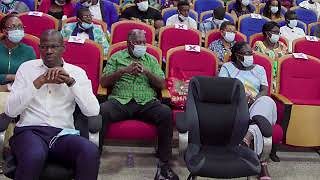
Videos · Sep 2021
Ivorian lawyer Brigitte Mensah continues legal work and disability-rights advocacy after losing her sight, prompting questions about accessible voting, legal services and public institutions.
05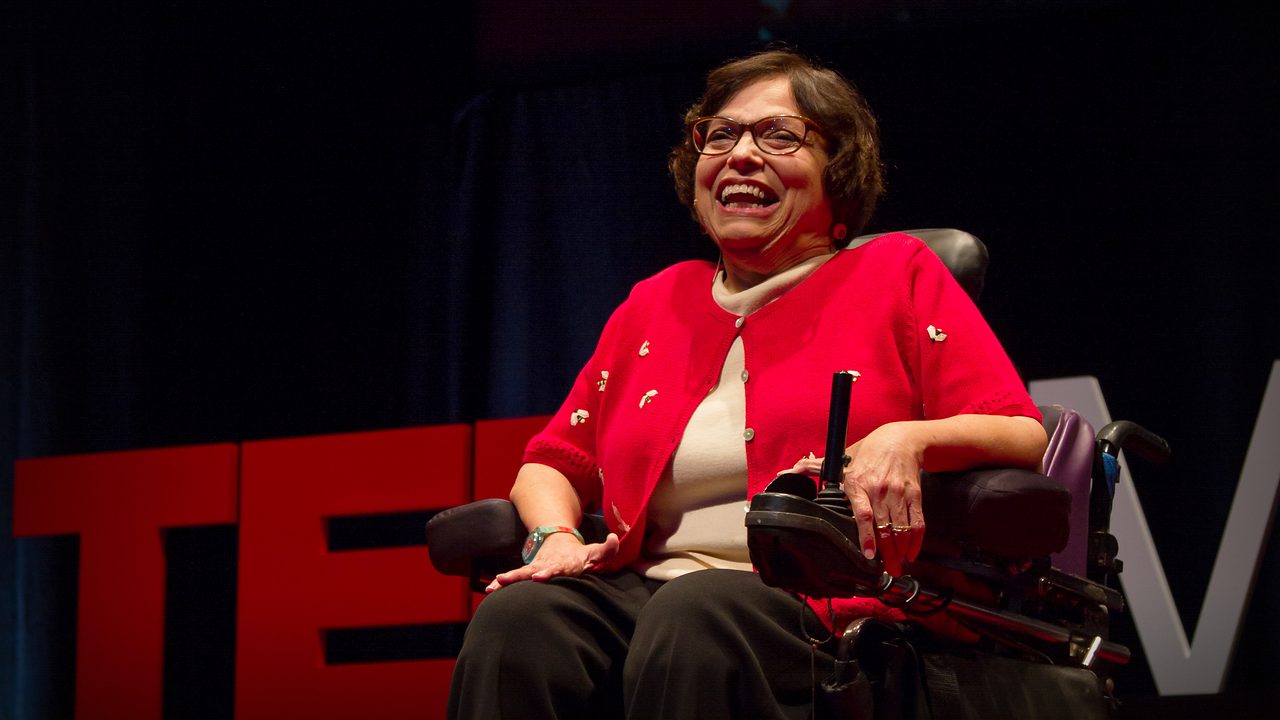
Videos · Mar 2018
Judith Heumann connects her struggle for education and public participation with the Section 504 protests, showing how collective organizing turns a legal promise into an enforceable right.
06
Videos · Apr 2014
In this TEDxSydney talk, Stella Young critiques inspiration porn and the way nondisabled society consumes disabled people as objects of moral uplift.
Articles · Aug 2017
Mingus names the structural experience of disabled people being forced to disclose bodies, needs, medical histories, and vulnerability in order to access basic survival.
02Articles · Sep 2016
Sins Invalid condenses disability justice into principles including intersectionality, leadership by those most impacted, anti-capitalism, cross-movement organizing, wholeness, interdependence, collective access, and collective liberation.
03Articles · Jun 2015
Patty Berne's Sins Invalid essay distinguishes disability rights from disability justice, centering intersectionality, leadership by those most impacted, anti-capitalism, cross-movement organizing, collective access, and collective liberation.
04Articles · Aug 2011
Mingus writes from disability justice to critique how beauty, normality, and desirability organize bodily value, proposing a liberatory politics of moving toward the ugly.
05Articles · May 2011
Mia Mingus introduces access intimacy: the bodily ease, trust, and relational safety that can emerge when someone deeply understands and respects a disabled person's access needs.
06Articles · Feb 2011
Mia Mingus explains why social justice movements must move from treating disability as an individual problem or single-issue rights concern toward understanding it as political experience, community history, and a framework for collective liberation.
Papers · Apr 2022
Sarala Emmanuel and Shreen Saroor document how disabled women in eastern Sri Lanka encounter gender norms, inaccessible services and gaps in violence response, and how collective experience is translated into rights advocacy.
02Papers · Jan 2021
Nguyen, Gonick and Bui examine how disabled girls in Vietnam use phone-made short films to represent violence and exclusion, and ask whether participatory images can shift who gets to narrate research.
03Papers · Jul 2017
Drawing on narratives from 16 disabled women in Harare, Christine Peta examines communication and information barriers in reproductive care, and the tension between imposed asexuality, control of intimacy and reproductive autonomy.
04Papers · Jan 2005
Garland-Thomson maps feminist disability studies as a field, showing how disability reshapes feminist questions about bodies, staring, normalcy, dependency, and public life.
05Papers · Jan 2003
McRuer reads As Good As It Gets to show how queer and disabled characters become resources for a heterosexual protagonist’s transformation - and how able-bodied and heterosexual norms reinforce each other.
06Papers · Jun 1989
Wendell begins from disability as socially constructed from bodily reality, asking how ideals of bodily control, productivity, and independence shape feminist body politics.
