Environmental Justice · Screening
The powerful women on the front lines of climate action
Indonesian conservationist Farwiza Farhan shows how women rangers in Aceh use local knowledge, collective patrols and community forestry permits to protect the rainforest and water their village depends on.
Screening notes
Farwiza Farhan’s talk brings climate action down from distant policy goals to daily life in an Acehnese village. She describes how Sumini connected the 2015 floods with forest loss, the village’s water supply, farming and safety, then organized a women-led ranger group. The forest is not an abstract “nature”: local households depend on mountain coffee, streams and the surrounding ecosystem. Later Associated Press reporting documents how the patrol uses community permission, training and everyday conversation to make conservation part of local governance.
The point is not simply that “women can be rangers.” It is also a question of whose knowledge counts in decisions. Women may know the routines of collecting water, farming and noticing changes in the land, without being recognized as formal resource managers. Patrolling, mapping and applying for a community forestry permit let them translate experience into evidence that can negotiate with government systems. This work depends on resident organizing, legal permission, technical training and outside support; individual courage alone cannot redistribute authority over forests.
Feminist environmental justice also asks us to reject the idea that women are naturally closer to nature. Women’s involvement may grow from their everyday responsibility for water, food and household safety. If that responsibility simply becomes more unpaid patrol work without compensation, decision-making power or safety, “empowerment” can reproduce the burden it claims to change. The questions are not whether women are inherently better at conservation, but who decides land use, who bears environmental risk and whose work is recognized.
Farhan’s example shows that local action needs institutional resources and collective support if it is to last, not only praise for an individual hero. For another Indigenous women’s account of environmental stewardship, see Nina Gualinga’s talk on forest guardianship.
Talk and further reading

The work that makes all other work possible
Ai-jen Poo / 0:16
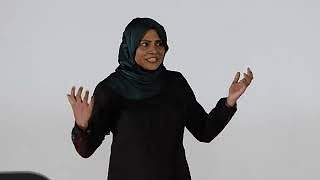
I Saw None, so I Built One: Women in the Tech Community
Aishath Adnan / 0:12

Talking Bodies and Sexualities
Bivishika Bhandari / 0:13

My fight for disability rights
Brigitte Mensah / 0:14
Reader responses
After the screening
Share your response or add another moving-image thread worth following.
Join the Discussion
Loading comments...
Support Us
If you find our content valuable, please consider supporting FemRes.