Anti-Sexual Violence · Screening
Violence against Women Is a Men’s Issue
Jackson Katz uses grammar and bystander intervention to examine disappearing perpetrators, peer permission and institutional leadership.
Screening notes
Calling violence against women only a women’s issue lets men position themselves as outsiders offering optional help. In this talk, Jackson Katz changes the frame toward peer permission, organizational responsibility and leaders’ resource decisions. The talk was recorded in 2012 and published on TED in 2013; these are distinct dates.
How a sentence loses its perpetrator
Drawing on feminist linguist Julia Penelope, Katz moves from an active sentence naming John’s assault on Mary through passive forms toward a description of Mary as a battered woman. The actor disappears while injury becomes her identity. This exceeds stylistic correction. Repeatedly asking why she stayed or how she could avoid harm can remove perpetration and its supporting environment from the explanation.
The bystander approach then moves beyond isolated perpetrators and victims toward friends, colleagues, teammates and institutions. Whether a demeaning joke wins approval or a boundary violation meets challenge affects what a group permits. Breaking complicit silence need not require everyone first to identify as a potential perpetrator. It requires recognizing one’s existing place within relationships that shape conduct.
Intervention needs more than individual courage
Katz emphasizes that athletic directors, university leaders and other decision-makers control resources and priorities. Training students or junior staff without safe channels for dissent cannot do the whole work of prevention. Courage and institutional conditions belong together: who risks employment or belonging by speaking, and who can change that cost?
The title does not mean all men perpetrate violence or women never do. The talk recognizes different positions while refusing gender as an exit from responsibility. Nor should its argument recenter male spokespeople in a movement organized by women. Men’s participation should change peer norms and resources, rather than demand extra gratitude.
This explains a prevention framework, not an experiment establishing identical effects everywhere. Bumingbai’s episode on male feminists examines the distance between verbal support and daily action in Chinese. bell hooks’s The Will to Change connects emotional training and domination. Both move accountability beyond reassuring oneself that one is not a bad man.
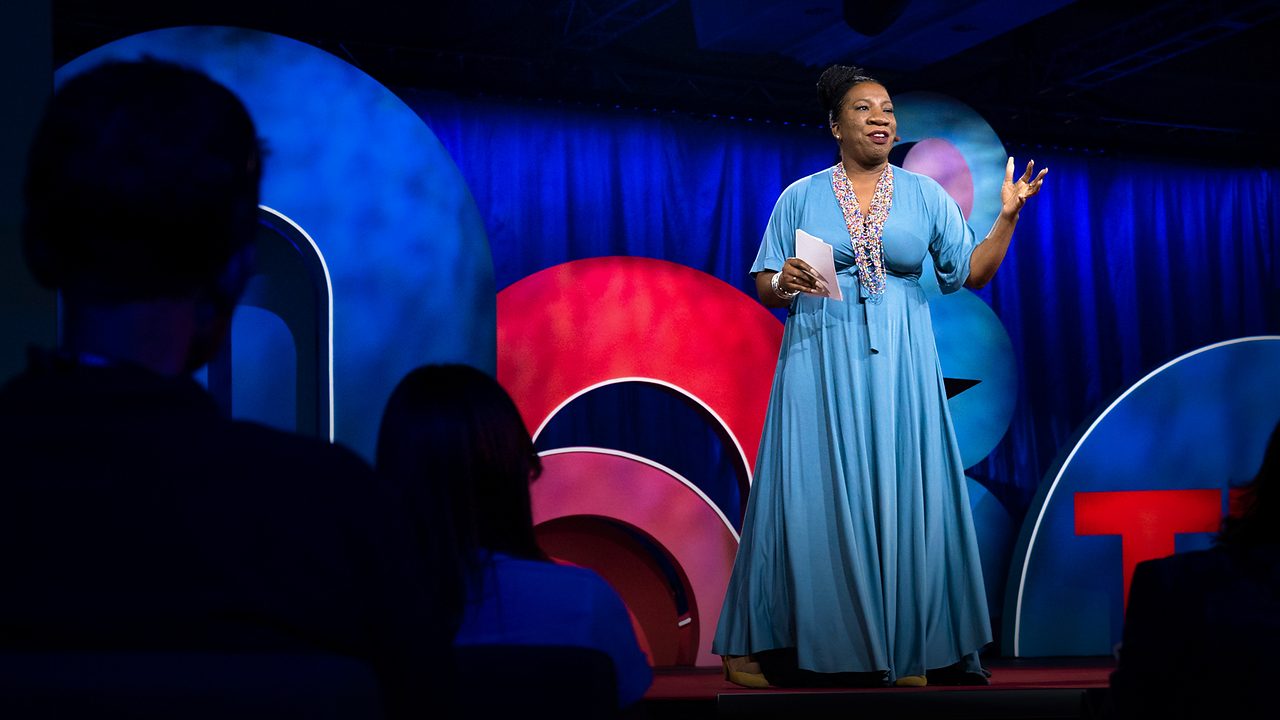
Me Too is a movement, not a moment
Tarana Burke / 16:05

A Warrior’s Cry Against Child Marriage
Memory Banda / 12:28

Giving Voice to Absence
Verónica Villalvazo / 23:17

Who Cares? The Gendered Burden of Unpaid Care Work
Aina Salleh / 11:09
Explore another medium
- Podcasts
Bai Yu and Lai Fu: What Makes a Male Feminist?
袁莉; 白鱼; 来福 / 不明白播客
Yuan Li’s conversation examines domestic planning, rewards for male allies and women’s anger, asking what changes after a claim to support equality.
Anti-Sexual Violence · Gender Roles - Books
The Will to Change: Men, Masculinity, and Love
bell hooks
Deeply analyzes how patriarchy harms men, explores how men can participate in feminist movements, and advocates for building new masculinity based on love and equality.
Continue through the issues
Reader responses
After the screening
Share your response or add another moving-image thread worth following.
Join the Discussion
Loading comments...
Support Us
If you find our content valuable, please consider supporting FemRes.