
Latin American Feminism · Books
Compañeras: Zapatista Women’s Stories
An oral history of Zapatista women’s cooperatives, the Women’s Revolutionary Law, and the unfinished struggle over land, care, and community autonomy.
Review and reading guide
Compañeras: Zapatista Women’s Stories follows women’s participation in the movement in Chiapas across generations. Hilary Klein, an organizer who lived and worked in the region for about six years, brings together accounts of women who became insurgents, community leaders, educators, healers, and negotiators. The book’s political question is not simply whether women entered the movement, but how participation changed the distribution of voice, work, and authority—and where older relations remained in place. The publisher identifies the book as a collection of stories from grandmothers, mothers, and daughters (edition and publisher description).
The form of those stories matters. In a 2015 interview, Klein explains that Zapatista women first wanted to preserve their own histories for use in their communities; they later asked her to help prepare a version for readers outside them. She describes her role as a “cultural bridge,” adding that her own writing supplies historical context around the women’s interviews. That account makes mediation visible: the book is not an unfiltered transcript of a whole movement, but neither is it simply an outsider’s interpretation imposed on silent subjects. The women helped initiate the project and remain political narrators within it (full interview transcript).
Klein’s account of women’s cooperatives shows why autonomy has an economic as well as a symbolic dimension. In the interview, she describes women deciding in assemblies what kind of cooperative to form: artisan work could bring income from outside markets, while vegetable gardens or raising chickens could supply food within communities. Klein says these women-only spaces could become a first place where some participants spoke publicly and developed a sense of collective power. Yet she also notes that women’s and men’s cooperatives often followed an existing gendered division of labor. The same practice could therefore create resources and political voice while leaving the allocation of work partly intact. That tension is more instructive than treating “cooperative” as an automatic synonym for liberation.
The Women’s Revolutionary Law is another anchor. Klein describes drafting and passage by the EZLN in 1993, wider public visibility around the 1994 uprising, and the earlier conversations and assemblies among women that shaped it. Its stated rights span political participation, health and education, freedom from violence, and decisions about marriage and children. But a written law cannot by itself reorganize family life: Klein emphasizes the work of education and changing everyday norms needed to put those rights into practice. The distinction between a declaration and its implementation lets the book ask not only what a movement promises, but who must do the continuing labor that makes a promise real.
The interview also complicates any simple success story. Klein discusses a passage in the book in which women’s right to own or inherit land is less firmly defended than their right to participate politically. She says land taken over by the movement was divided primarily into parcels for men, while later inheritance decisions were often left to individual families. This is Klein’s account of a particular contradiction, not a comprehensive survey of every Zapatista community. Still, it gives the book a sharp feminist test: representation in assemblies matters, but so does control over the land and resources on which autonomy depends. A movement can open political roles while reproducing unequal material arrangements.
These examples also warn against flattening Indigenous women into a single story of either victimization or revolutionary empowerment. Klein’s interview places the accounts in Chiapas and in a particular period; they cannot stand for every Indigenous community, nor do they establish present-day conditions. They do show how gendered authority operates across public and private life: who may leave home, speak in a meeting, earn or allocate resources, inherit land, and decide about marriage and children. The book is most compelling when read as an account of women building collective autonomy while disputing the terms on which that autonomy is organized.
Compare these debates with the ten clauses of the Zapatista Women’s Revolutionary Law: which commitments are explicit, and which material conditions remain questions to pursue? The original issue is dated December 1993; its later wider public circulation should not turn the text itself into a work first dated 1994. For a broader comparison across six countries, continue with Radical Women in Latin America: Left and Right.
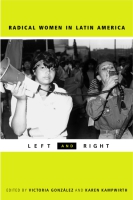
Radical Women in Latin America: Left and Right
Victoria González-Rivera, Karen Kampwirth

Feminisms in Movement
Lívia De Souza Lima, Edith Otero Quezada, Julia Roth
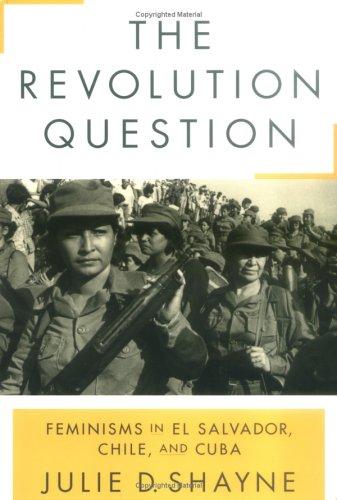
The Revolution Question
Julie D. Shayne

The Doctor and the Saint
Arundhati Roy
Explore another medium
- Articles
Zapatista Women’s Revolutionary Law
Ejército Zapatista de Liberación Nacional (EZLN)
The Zapatista law joins women’s public authority to bodily and household autonomy, making internal gender relations part of the revolutionary struggle itself.
Latin American Feminism · Indigenous Feminism - Videos
What Is Community Feminism? A Contribution to Ending Violence against Women
Julieta Paredes Carvajal
Aymara feminist thinker Julieta Paredes examines patriarchy as a historical relation and asks how shared life, bodies and community can become sites of transformation.
Latin American Feminism · Indigenous Feminism
Continue through the issues
Related theme · No. 08
Who sustains a revolution?
Beginning with a woman searching for her husband in Sambizanga, we follow the messages, care and organizing that sustain resistance. Across anticolonial struggle, labor and solidarity, who carries a revolution’s daily work—and who is left outside its promise of liberation?
Decolonial Feminism · Political Participation
Related theme · No. 01
Who does the invisible work?
Cooking, cleaning, care and emotional labor — this issue returns domestic and reproductive work to the political stage, and asks why it was ever treated as free and natural.
Domestic Labor
Reader responses
Readers' notes
Share your reading or add a thread worth following further.
Join the Discussion
Loading comments...
Support Us
If you find our content valuable, please consider supporting FemRes.