Mobility · Books
Flights
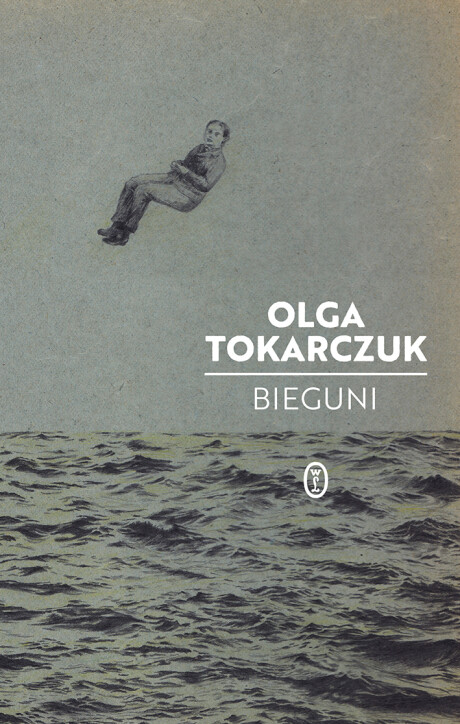
Original titleBieguni
Olga Tokarczuk’s nonlinear novel interweaves travel fragments, essays, and histories of the body to explore movement, memory, dissection, and preservation.
Review and reading guide
Olga Tokarczuk’s Flights is not a travel novel driven by one protagonist and a continuous plot. Short passages, narrative episodes, and reflections interrupt and illuminate one another. Observations from journeys sit beside stories of strangers and meditations on bodies, memory, and death; readers have to make connections across the gaps. Form is not decoration here: how an experience can be narrated becomes part of the reading.
The novel places travel beside human anatomy. The seventeenth-century anatomist Philip Verheyen studies and draws his own amputated leg; Chopin’s heart makes a journey from Paris to Warsaw; and a North-African-born enslaved man who later became an Austrian courtier is stuffed and displayed after death. These episodes do not collapse into a single symbol. They present the body as a place of sensation, memory, and identity, but also as something that can be studied, preserved, possessed, or exhibited.
Women’s movement is no guarantee of easy freedom. One story follows a wife accompanying her much older husband on a cruise through the Greek islands; another recounts the disappearance of a wife and child during a holiday in Croatia. Their relationships and risks differ. From these episodes a feminist reading can ask: who can leave, who carries care, whose body is watched or classified, and who can choose the direction of movement? The novel does not settle those questions into the single claim that home is a prison and travel is liberation.
Movement and fixity pull against each other throughout the book. Travelers’ fragmentary memories, preserved bodily remains, maps, and airports all raise questions about how fleeting experience is made to last. Preservation can resist forgetting, but it can also turn a life into a static specimen. To read mobility as the sole route to women’s agency would miss the novel’s attention to bodily vulnerability, historical violence, and unequal conditions of movement.
More specifically, the wife on the cruise is not simply choosing a trip: she accompanies a much older husband who is teaching aboard the ship. Movement is embedded in marriage, professional arrangements, and care; it does not automatically equal autonomy. The story of the wife and child who disappear offers a different image of travel—not a promise of freedom but an inexplicable absence and a rupture in a relationship. Set beside these lives, the episodes of anatomy and preserved remains bring travel, bodies, and narration into contact. People move, but so do memories, organs, and other people’s gazes across borders. The reader can ask who determines a journey, who is left behind, and who retains control of the story after movement has taken place.
Verheyen’s leg is both part of a person and an object of anatomical study; Chopin’s heart acquires cultural and emotional meanings as it crosses a border, yet remains an organ that once lived within a body. Tokarczuk holds these scales together: grand historical narratives do not erase the flesh, and the body is not imagined as a pure individual outside politics.
There is no stable route carrying the reader toward a final answer; return, diversion, and interruption are themselves part of the book’s account of travel. Knowledge remains provisional and partial, and observing a body or an unfamiliar place does not grant anyone ownership of it.
Flights’ feminist value is therefore less a manifesto than a way of asking questions. It invites readers to notice the power relations behind movement while leaving the boundaries between body, narrative, and knowledge unsettled. Its fragmentary structure can disorient: connections have to be pursued by the reader, and the book offers no systematic political argument. That uncertainty is part of its invitation to read slowly, reconsidering when a body acts and when it is made into an object by others.


Explore another medium
- Films
Anatomy of a Fall
Justine Triet
A gripping courtroom drama dissecting a marriage, truth, and gender roles through the trial of a woman accused of her husband's murder. Winner of the Palme d'Or.
Philosophy · Family Liberation - Podcasts
Decolonizing Sex
Matika Wilbur & Adrienne Keene
This All My Relations episode with Kim TallBear discusses critical polyamory, Indigenous relational ethics, feminism, and settler marriage, making it a key audio resource on how sex, intimacy, and family are structured by colonial power.
Body Politics · Family Liberation
Continue through the issues
Reader responses
Readers' notes
Share your reading or add a thread worth following further.
Join the Discussion
Loading comments...
Support Us
If you find our content valuable, please consider supporting FemRes.