
Women of Color Feminism · Books
Making Face, Making Soul/Haciendo Caras
Gloria Anzaldúa’s 1990 anthology challenges who gets to make feminist theory, bringing poetry, memoir, fiction, art, and scholarship into a coalition built across difference.
Review and reading guide
Edited by Gloria Anzaldúa, Making Face, Making Soul/Haciendo Caras: Creative and Critical Perspectives by Feminists of Color is not simply a collection that adds more voices to an already settled feminist conversation. Its intervention is to question who is allowed to define the conversation, what kinds of work count as theory, and how readers might make meaning across histories that do not collapse into one another. The anthology’s form is part of this argument: more than seventy works bring poetry, fiction, personal narrative, visual art, scholarship, and political writing into the same editorial space.
Anzaldúa’s project grew from a reader she assembled while teaching women’s studies at the University of California, Santa Cruz. The Gloria E. Anzaldúa Literary Trust describes two aims she gave for the volume: making a wider body of writing by women of color available, and intervening in academic theory. Those aims are connected. If an institution recognizes theory only when it appears in a narrow academic register, it can make other forms of knowledge look like personal testimony, cultural detail, or ornament. Anzaldúa’s preface argues for creating categories where existing ones exclude people. This is not a rejection of rigorous thought; it is a challenge to the authority that decides in advance which forms of thought will be legible as rigorous.
The contents make that challenge tangible. The volume places creative and personal writing alongside work whose titles directly name institutional and disciplinary problems: Barbara Smith’s “Racism and Women’s Studies,” the collaborative “The Costs of Exclusionary Practices in Women’s Studies,” and Lynet Uttal’s “Inclusion Without Influence: The Continuing Tokenism of Women of Color.” Elsewhere the contents include María Lugones on ethnocentric racism and Chela Sandoval’s report on feminism and racism. These titles are not interchangeable examples of one thesis. Their placement alongside poems, fiction, and memoir changes the reader’s task: rather than receiving a single synthesis from above, readers must follow how different forms expose, name, and contest exclusion. The editorial arrangement makes connection an activity, not a claim that the contributors all speak with one voice.
That distinction matters to the book’s idea of coalition. “Women of color” is a political and historical framing for this anthology, not a description of a homogeneous community. The volume brings writers and artists with different racial, cultural, sexual, and intellectual locations into relation without making those locations equivalent. Its coalition does not depend on pretending that every woman encounters the same structures in the same way. Instead, the question becomes how to build a shared feminist practice while disagreements about race, sexuality, class, nation, and cultural authority remain visible. That is a more demanding model of solidarity than either simple inclusion or a celebration of diversity: it asks what changes in the terms of knowledge when those long treated as its objects become makers and interpreters.
The anthology also places pressure on the reader. Its range can feel expansive and deliberately unfinished; a collection that refuses one disciplinary voice asks for active work in return. Readers must notice which connections the editor invites, where a particular essay or form resists easy comparison, and when “coalition” risks turning difference into a symbol of unity. The historical language of a 1990 U.S. feminist anthology should not be made to stand for every present-day framework or for all Indigenous, Black, Asian American, Chicana, Latina, lesbian, or other communities named in its contents. Its lasting usefulness lies not in providing a complete map, but in making the map’s authorship and boundaries available for argument.
The book’s strongest question is methodological as much as political: who has to translate their knowledge into an institution’s preferred language before it can count? Anzaldúa’s answer is not to abandon theory, but to let theory be made through forms that dominant academic conventions have often separated from it—story, image, memory, poetry, and embodied experience. Read alongside the later This Bridge We Call Home, which revisits coalition and transformation with Anzaldúa and AnaLouise Keating as co-editors, this anthology offers an earlier and still challenging lesson: solidarity is not achieved by smoothing every voice into agreement. It is made through practices of listening, interpretation, and self-questioning that leave difference present.
Publication and editorial description: Aunt Lute Books. Anzaldúa’s account of the anthology’s purpose and preface: Gloria E. Anzaldúa Literary Trust. Historical context: UT Austin’s Anzaldúa Papers finding aid. Edition and table of contents: Open Library.

Borderlands/La Frontera: The New Mestiza
Gloria Anzaldúa

Chicana Feminisms: A Critical Reader
Gabriela F. Arredondo, Aida Hurtado, Norma Klahn, Olga Nájera-Ramírez, Patricia Zavella

Color of Violence: The INCITE! Anthology
INCITE! Women of Color Against Violence
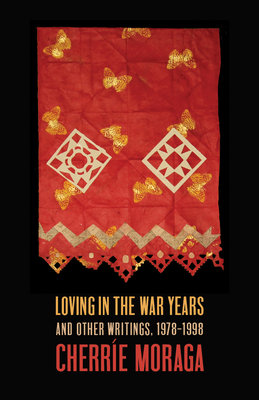
Loving in the War Years
Cherríe Moraga
Reader responses
Readers' notes
Share your reading or add a thread worth following further.
Join the Discussion
Loading comments...
Support Us
If you find our content valuable, please consider supporting FemRes.