
Female Friendship · Books
My Brilliant Friend
Original titleL'amica geniale
In 1950s Naples, Elena and Lila’s friendship is shaped by unequal schooling, class barriers, and gendered violence in the first Neapolitan novel.
Review and reading guide
Elena Ferrante’s My Brilliant Friend is the first of the Neapolitan novels, but its scope is not the half-century sometimes attributed to it. The book opens in the adult Lenù’s present, when she learns that Lila has disappeared, then returns to their childhood in a poor Naples neighborhood in the 1950s. It follows the girls into adolescence and ends with Lila’s wedding. That frame makes the story both a portrait of a friendship and an act of retrospective narration: Lenù is trying to write a life that has partly withdrawn from her.
Their different educational paths expose how talent is filtered through class and family resources. Lila’s sharp intelligence does not secure continued schooling; she is prevented from studying beyond elementary school. Lenù, whom Lila herself calls brilliant, can continue her education. The contrast is not simply a naturally gifted girl versus a merely diligent one. It asks what counts as ability when one girl receives more institutional opportunity, and what knowledge survives when formal schooling is withheld. Education opens a route outward for Lenù, but the novel does not present it as a magic escape from class or gender.
Friendship is the medium through which both girls think. Their conversations, reading, and mutual attention help them put experience into words; admiration and rivalry grow from the same intimacy. Lenù envies Lila’s speed and force of mind, while also measuring herself against her friend and sometimes benefiting from Lila’s insight. This is more than a corrective to sentimental portrayals of female friendship. The adult narrator’s voice also controls the account: Lila is brilliant partly as Lenù sees her, and readers must notice both the care involved in preserving a friend and the power involved in making her legible.
The neighborhood’s violence is not a backdrop detached from the girls’ choices. Power moves through family authority, street conflict, reputation, and the men who control money and mobility. The novel shows how women’s safety and prospects are negotiated inside these local relations, rather than reduced to a universal rule that women have only two possible lives. Lila’s teenage wedding, where the first volume ends, is publicly staged as security and success. Its promise of mobility is real enough to matter, but marriage is not made equivalent to freedom, and the first book does not resolve what follows.
Lila’s smarginatura—the sense that the edges of things and people are dissolving—is not a diagnosis but a literary experience through which the world’s apparent order becomes unstable. Read beside the novel’s class boundaries and gendered violence, it can suggest how precarious the social categories organizing the neighborhood are. That symbolic reading is an interpretation, not a clinical explanation of Lila.
The feminist force of the novel lies in holding these pressures together: girls’ intellectual lives, the institutions that ration education, the violence that constrains movement, and a friendship that can be sustaining and unequal at once. Lenù’s story of Lila is not the same as Lila’s own account. The book asks readers to value the friendship that makes thought possible while remaining alert to the narrator’s limits and to the life she cannot fully know.
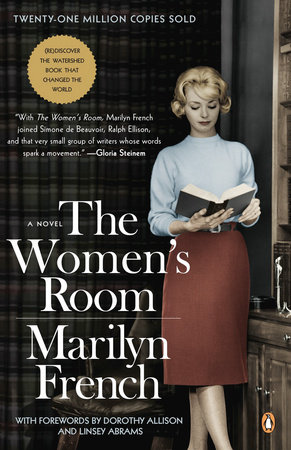
For a distinct comparison in feminist fiction about marriage and self-determination, read alongside Marilyn French’s The Women’s Room; the books arise from different histories and are not interchangeable. Ferrante’s official book page gives the first volume’s setting and arc. For further critical context, see Hypatia on education, friendship, and envy and female freedom and smarginatura.


Explore another medium
- Films
Emma.
Autumn de Wilde
An adaptation of Jane Austen's novel directed by Autumn de Wilde, starring Anya Taylor-Joy. The film follows wealthy young woman Emma Woodhouse in Regency-era England as she enthusiastically matchmakes for others, discovering her own true emotions in the process. The director reinterprets this classic literary work with exquisite visual aesthetics and a modern feminist perspective, deeply exploring important themes including female independence, class consciousness, marriage choices, and coming-of-age awakening.
Female Friendship · Class Analysis - Films
Hustlers
Lorene Scafaria
A crime comedy-drama directed by Lorene Scafaria, starring Jennifer Lopez and Constance Wu. Based on true events, following a group of strippers who band together to scam wealthy Wall Street clients after the 2008 financial crisis. The film deeply explores crucial issues including class revenge, female solidarity, economic inequality, sex worker rights, and the impact of the 2008 financial crisis on working-class women, presenting a complex story of how marginalized women seek survival and fight back in economic hardship.
Female Friendship · Class Analysis
Continue through the issues
Reader responses
Readers' notes
Share your reading or add a thread worth following further.
Join the Discussion
Loading comments...
Support Us
If you find our content valuable, please consider supporting FemRes.