Who gets to live on their own terms?
In 37 Seconds, the camera stays at Yuma’s seated height as standing passengers block her view. From that train carriage we turn to Disability Visibility, Alice Wong’s collection of first-person writing, and ask who gets to describe a life and decide how it is lived. Thirty works follow privacy, personal assistance and public services from a summer camp to a federal sit-in. When support fails, whose time and income make up the difference?
In this issue
30 items
Who gets to tell their own story?7
Books · Jun 2020
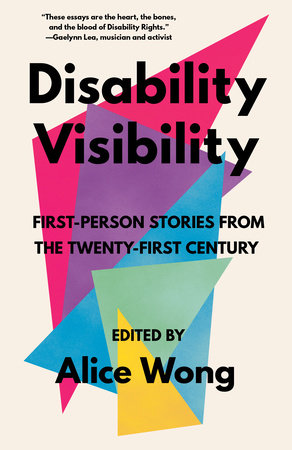
Disability Visibility
Alice WongEdited by Alice Wong, Disability Visibility gathers first-person writing by contemporary disabled people, bringing disability culture, media representation, embodiment, law, art, and everyday life into public view.
02
Films · Feb 2019
37 Seconds
HIKARIHIKARI follows wheelchair user and manga artist Yuma Takada through a book signing, two editorial meetings, and a night-time lift as she gains a say in her work, care, and story.
03
Videos · Nov 2021
The Barriers to Everyday Life
Srishti PandeyIn her TEDxShivNadarUniversity talk, Srishti Pandey starts from the everyday life of a disabled woman to challenge inspiration narratives and connect ableism with sexual autonomy and access.
04Papers · Jan 2021
Engaging Girls with Disabilities through Cellphilming: Reflections on Participatory Visual Research as a Means of Countering Violence in the Global South
Engaging girls with disabilities through cellphilming: Reflections on participatory visual research as a means of countering violence in the Global SouthXuan Thuy Nguyen, Marnina Gonick, Tuyen BuiNguyen, Gonick and Bui examine how disabled girls in Vietnam use phone-made short films to represent violence and exclusion, and ask whether participatory images can shift who gets to narrate research.
05Papers · Jan 2003
As Good As It Gets: Queer Theory and Critical Disability
Robert McRuerMcRuer reads As Good As It Gets to show how queer and disabled characters become resources for a heterosexual protagonist’s transformation - and how able-bodied and heterosexual norms reinforce each other.
06
Books · Oct 2011
Feminist Disability Studies
Kim Q. HallEdited by Kim Q. Hall, this collection links feminist theory and disability studies across embodiment, literature, race, citizenship, sexuality, and the politics of visibility.
07Articles · Nov 2016
Investigating Multiple Discrimination against Disabled Women
Kumiko UsuiA Japanese activist's account of a disabled-women-led inquiry asks why demands for evidence can coexist with statistics and services that leave women out.
What do you give up to get help?7
Articles · Aug 2017
Forced Intimacy: An Ableist Norm
Mia MingusMingus names the structural experience of disabled people being forced to disclose bodies, needs, medical histories, and vulnerability in order to access basic survival.
09Articles · May 2011
Access Intimacy: The Missing Link
Mia MingusMia Mingus distinguishes access intimacy from reluctant help: can needs be trusted without humiliation, emotional repayment or surrendering autonomy?
10
Videos · Mar 2023
Why Autism Is Often Missed in Women and Girls
Kate KahleKate Kahle reflects on how diagnostic frameworks can miss autistic women and girls. Her talk connects masking, gender expectations and clinical recognition while cautioning against treating one personal story as every autistic person’s experience.
11
Podcasts · Jun 2017
Eib
Sowt MediaSowt's Arabic storytelling podcast follows how shame and gender expectations shape care, desire and the possibilities of speaking about everyday life.
12Papers · Nov 2024
Relational Limitations, Mistreatment and Discrimination
Les déclarations de maltraitances et de discriminations sont plus fréquentes en cas de handicap relationnelSuzanne ScottScott’s analysis of France’s 2022 survey separates mistreatment from discrimination, examining disability, gender and the conditions of answering.
13Papers · Jul 2017
Disability is not asexuality: the childbearing experiences and aspirations of women with disability in Zimbabwe
Christine PetaDrawing on narratives from 16 disabled women in Harare, Christine Peta examines communication and information barriers in reproductive care, and the tension between imposed asexuality, control of intimacy and reproductive autonomy.
14Articles · Nov 2016
General Comment No. 3 on women and girls with disabilities
UN Committee on the Rights of Persons with DisabilitiesThe CRPD Committee connects gaps in gender and disability policy with legal capacity, consent, violence prevention and meaningful participation beyond protective control.
Where can you go once you leave home?7

Films · Mar 2020
Crip Camp: A Disability Revolution
Nicole Newnham, Jim LeBrechtCamp Jened’s conversations about privacy and the work of feeding a 1977 sit-in show how disabled organizers made participation possible.
16Papers · Jun 2011
Misfits
Misfits: A Feminist Materialist Disability ConceptRosemarie Garland-ThomsonRosemarie Garland-Thomson examines changing encounters between bodies and environments, connecting disability, dependence and agency.
17
Videos · Jan 2021
Mobility for All
TU Wien / GEECCOA TU Wien animation connects travel chains, care and inequality, asking how transport can support carers today while changing gender roles over time.
18
Videos · Sep 2021
My fight for disability rights
Brigitte MensahIvorian lawyer Brigitte Mensah continues legal work and disability-rights advocacy after losing her sight, prompting questions about accessible voting, legal services and public institutions.
19Papers · Apr 2022
Experiences of Gendered Norms and Mobilizing for Rights of Women Living With Disabilities in the Post-war Context in Sri Lanka
Sarala Emmanuel, Shreen SaroorSarala Emmanuel and Shreen Saroor document how disabled women in eastern Sri Lanka encounter gender norms, inaccessible services and gaps in violence response, and how collective experience is translated into rights advocacy.
20
Books · May 2020
Decarcerating Disability
Liat Ben-MosheLiat Ben-Moshe connects deinstitutionalization with prison abolition, challenging the claim that closing institutions caused mass incarceration.
21Articles · Oct 2017
General Comment No. 5 on living independently and being included in the community
UN Committee on the Rights of Persons with DisabilitiesA guide to Article 19 through housing choice, personal assistance and access to public services, with attention to gender and care work.
Who sustains care and who shares the cost?9

Films · Oct 2016
The Bacchus Lady
죽여주는 여자E J-yongAn older sex worker in a Seoul park is drawn into poverty, illness, and requests for death. E J-yong returns aging from demographic abstraction to class, gender, care, and survival.
23
Books · Oct 2018
Care Work: Dreaming Disability Justice
Leah Lakshmi Piepzna-SamarasinhaLeah Lakshmi Piepzna-Samarasinha frames disability justice as practical knowledge from sick and disabled queer, trans, Black, and brown communities, centering collective access, care webs, and liberation where no one is left behind.
24
Podcasts · Sep 2024
How to care for the people who take care of us
How to Be a Better Human / Ai-jen PooAi-jen Poo follows care from a trip to choir practice to agreements about working hours, asking how both recipients and workers can make decisions about their own time.
25
Books · Sep 2020
Trans Care
Hil MalatinoHil Malatino reframes care through trans mutual aid, burnout, medical systems, and the unequal labor that holds community together.
26
Books · Apr 2013
Caring Democracy: Markets, Equality, and Justice
Joan C. TrontoJoan C. Tronto recasts care as a central public concern of democracy, asking who sustains life, who is permitted to evade care, and how markets produce a democratic care deficit.
27Papers · Jul 2016
Contradictions of Capital and Care
Nancy FraserFraser traces care crises through family wages, dual-earner households and global care chains, asking how social protection can support autonomy as well as care.
28Articles · Dec 2024
Brazil’s National Care Policy: Law No. 15.069
Congresso Nacional do BrasilBrazil’s 2024 care law puts services, support for unpaid carers and labour protection for paid care workers into a common policy.
29Articles · Jun 2024
ILO Resolution on Decent Work and the Care Economy
International Labour ConferenceThe 2024 resolution joins redistribution of unpaid care to fair rewards and representation for paid care workers.
30Articles · Sep 2016
10 Principles of Disability Justice
Sins InvalidSins Invalid condenses disability justice into principles including intersectionality, leadership by those most impacted, anti-capitalism, cross-movement organizing, wholeness, interdependence, collective access, and collective liberation.
Connected issues
Related theme · No. 09
Who is allowed to desire?
Beginning with The Right to Sex, we ask whose desire is treated as natural and whose requires moral permission. Power shapes desire, but desire gives nobody a claim to another person’s body. Attraction, love, solitude and care have no single answer. Across sexual hierarchies, erotic writing, asexuality and situated experiences, we make room for exploration, uncertainty, refusal and a change of mind.
Bodily Autonomy
Related theme · No. 01
Who does the invisible work?
Cooking, cleaning, care and emotional labor — this issue returns domestic and reproductive work to the political stage, and asks why it was ever treated as free and natural.
Care Economy