Migration
Explore curated feminist content about Migration
- 021
- 21 items
- 06
- Connection paths
Connection paths
Adjacent topics
Media composition
Read along this issue
21 · Migration
Books
View all
Books · Oct 2026
Night of a Thousand Hells
Malam Seribu JahanamIntan ParamadithaIntan Paramaditha’s Indonesian gothic novel connects sisterhood, care and migration, asking whose labor makes another woman’s freedom and family storytelling possible.
02
Books · Jul 2016
Disposable Domestics
Grace ChangGrace Chang traces how immigration policy, welfare reform, and global capital create a low-paid, stigmatized, yet socially essential workforce of immigrant women.
03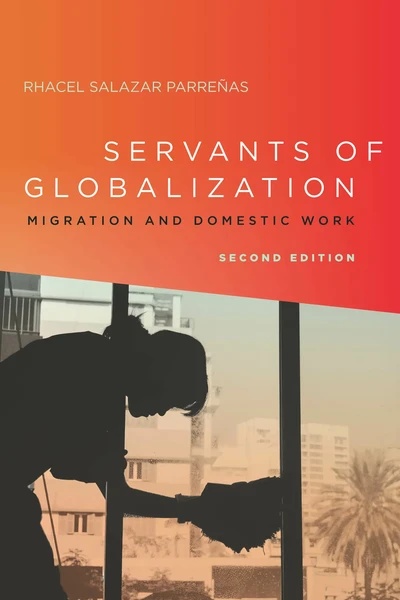
Books · Aug 2015
Servants of Globalization
Rhacel Salazar ParreñasCentered on migrant Filipino domestic workers, Parreñas develops the international division of reproductive labor and offers a foundational account of global care chains, transnational families, and migrant women's labor.
04
Books · Dec 2012
Women and Wars
Carol CohnCarol Cohn’s feminist security studies collection traces gender through war economies, sexual violence, displacement, militaries, peace processes, and postwar life.
05
Books · Jan 2012
Feminism and Migration
Glenda Tibe Bonifacio (ed.)A feminist collection spanning Western and non-Western settings that asks when migration enables agency and when it reorganizes labor, identity, and control.
06
Books · Jun 2010
Nimo's War, Emma's War
Nimo's War, Emma's War: Making Feminist Sense of the Iraq WarCynthia EnloeCynthia Enloe reads the Iraq War through eight Iraqi and American women, showing how gender shapes security, work, military service, and care - and why its costs continue after combat fades from view.
Films

Films · Sep 2019
Lingua Franca
Isabel SandovalWritten, directed, edited by, and starring Isabel Sandoval, this film brings trans identity, immigration status, care work, and intimacy into one fragile story of a Filipina caregiver in New York.
02
Films · Jan 2015
The Second Mother
Que Horas Ela Volta?Anna MuylaertThis Brazilian drama uses the conflict between a live-in housekeeper, her daughter, and an employer's family to expose domestic labor, separated motherhood, class boundaries, and women's dignity.
Videos

Articles
Papers
View allPapers · Jan 2019
Gender, migration and care deficits: what role for the sustainable development goals?
Sarah Gammage, Natacha StevanovicThis article connects women's migration, care deficits, and the Sustainable Development Goals, asking how global policy frameworks can respond to care responsibilities displaced across borders.
02Papers · Sep 2009
Love and Gold
Arlie Russell HochschildHochschild explains global care chains through the story of a Filipina migrant nanny: wealthy countries receive care while sending communities absorb care drain and emotional displacement.
03Papers · Dec 2007
The Sexual Politics of the New Abolitionism
Elizabeth BernsteinA key article on how anti-trafficking politics links sexuality, markets, morality, and punitive state power.
04Papers · Sep 2006
Globalization and the Increase in Transnational Care Work: The Flip Side
Jean L. PylePyle analyzes the growth of transnational care work through globalization and social reproduction, showing how nursing, domestic work, intimate labor, and migration regimes form part of the global economy rather than private arrangements outside it.
05Papers · Sep 2003
Transnational Migration: Bringing Gender In
Patricia R. Pessar and Sarah J. MahlerPessar and Mahler move migration studies away from neutral accounts of households or labor flows toward a gendered analysis of power, asking how transnational spaces shape resources, obligations, belonging, and agency.
06Papers · Aug 2000
Migrant Filipina Domestic Workers and the International Division of Reproductive Labor
Rhacel Salazar ParreñasParreñas's classic article makes global care chains concrete through migrant Filipina domestic workers, showing how care crises in middle-class households are displaced onto women from the Global South while creating new care gaps in sending communities.