Transnational Feminism
Explore curated feminist content about Transnational Feminism
- 025
- 25 items
- 06
- Connection paths
Connection paths
Adjacent topics
Media composition
Read along this issue
25 · Transnational Feminism
Books
View all
Books · Apr 2024
Feminisms in Movement
Lívia De Souza Lima, Edith Otero Quezada, Julia RothEdited by Lívia De Souza Lima, Edith Otero Quezada, and Julia Roth, this open-access collection connects feminist theory, embodied histories, and activist forms without treating the Americas as one tradition.
02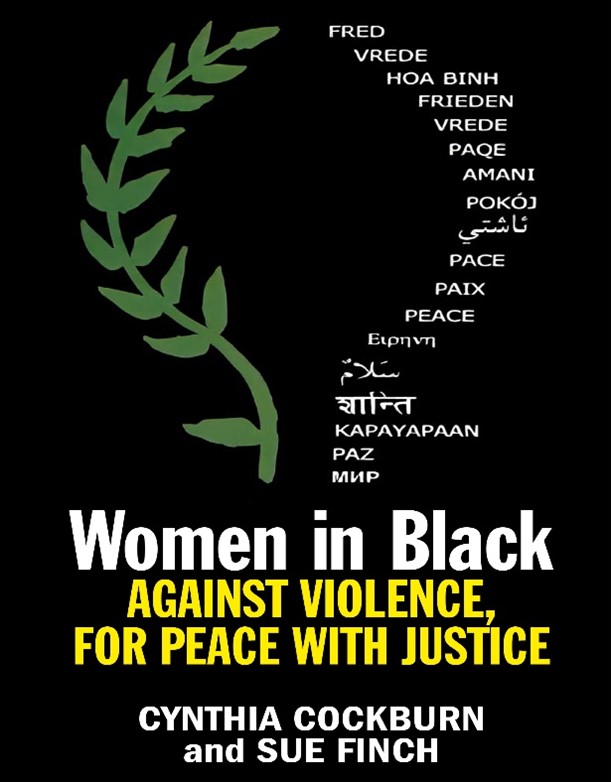
Books · Nov 2023
Women in Black
Women in Black: Against Violence, for Peace with JusticeCynthia Cockburn and Sue FinchA feminist movement history spanning more than three decades and five continents, documenting how Women in Black used black clothing, silent vigils, and local coalitions against occupation, war, militarism, apartheid, and gendered violence.
03
Books · Aug 2020
Feminism for the Americas
Katherine M. MarinoKatherine M. Marino recovers Latin American feminists as architects of global women’s rights, tracing how leadership and social justice reshaped Pan-American organizing.
04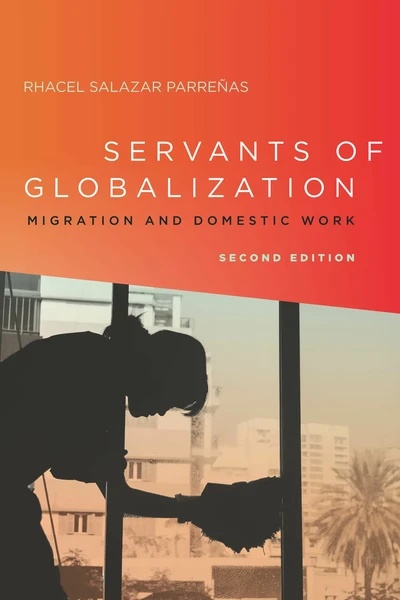
Books · Aug 2015
Servants of Globalization
Rhacel Salazar ParreñasCentered on migrant Filipino domestic workers, Parreñas develops the international division of reproductive labor and offers a foundational account of global care chains, transnational families, and migrant women's labor.
05
Books · Jan 2012
Feminism and Migration
Glenda Tibe BonifacioA feminist collection spanning Western and non-Western settings that asks when migration enables agency and when it reorganizes labor, identity, and control.
06
Books · Oct 2008
Feminism and War
Feminism and War: Confronting US ImperialismRobin L. Riley, Chandra Talpade Mohanty, and Minnie Bruce PrattThis collection examines how the United States legitimates war through “women’s liberation” and connects antiracist feminism to anti-imperialist organizing.
Articles
Articles · Aug 2013
Bangkok Civil Society Declaration: From Inclusive to Just Development
Asia and Pacific civil society organisationsAsia-Pacific civil society organisations connect development justice to redistribution, land, livelihoods and accountability to people.
02Articles · Jan 2009
Home Truths: A Global Report on Equality in the Muslim Family
MusawahMusawah’s global report draws on submissions from groups in thirty countries. Morocco’s family-law reforms and marriage registration in Britain show how different procedures shape access to protections.
03Articles · Sep 1995
Women’s Rights Are Human Rights
Hillary Rodham ClintonHillary Rodham Clinton’s 1995 Beijing speech links violence, reproductive decisions and political participation, while raising questions about representation.
Papers
View allPapers · Jan 2024
“Like Seeking Out a Lost Friend”: Reconsidering Pioneer Arab Feminists and Their Networks as Part of a/the First Wave
Roxanne DouglasRoxanne Douglas reconstructs journals, salons, correspondence, and organizing across Egypt, Palestine, and Lebanon to place Arab feminist networks inside - not after or outside - the history of feminism’s first wave.
02Papers · Sep 2009
Love and Gold
Arlie Russell HochschildTwo wages paid across borders and a mother’s calls to her daughter give Hochschild ways to ask who buys care time and how families sustain intimacy at a distance.
03Papers · Sep 2003
Transnational Migration: Bringing Gender In
Patricia R. Pessar and Sarah J. MahlerPessar and Mahler follow hometown fundraising and cross-border phone calls to ask who controls the money, messages and decisions that travel with migration.
04Papers · Jan 2003
“Under Western Eyes” Revisited
“Under Western Eyes” Revisited: Feminist Solidarity through Anticapitalist StrugglesChandra Talpade MohantyMohanty uses an Indonesian shoe factory in a syllabus and disputes over shared knowledge in India to make the links required for cross-border solidarity concrete.
05Papers · Sep 2002
Do Muslim Women Really Need Saving?
Do Muslim Women Really Need Saving? Anthropological Reflections on Cultural Relativism and Its OthersLila Abu-LughodLila Abu-Lughod examines rescue rhetoric around Afghanistan, connecting cultural difference to political history and responsibilities for global injustice.
06Papers · Aug 2000
Beyond the Politics of Location: The Power of Argument in a Global Era
Sylvia WalbyThis 2000 article by leading feminist sociologist Sylvia Walby challenges the dominance of standpoint epistemology and the 'politics of location' in feminist theory. Walby argues that in an era of globalization, feminism needs to move beyond location-based knowledge claims and embrace the power of reasoned argument to make effective universal claims about gender justice. The paper engages critically with postmodern and postcolonial feminist theories that privilege particular standpoints over universal reasoning.