Digital Feminism · Screening
I Saw None, so I Built One: Women in the Tech Community
Maldivian technology manager Aishath Adnan reflects on founding Women in Tech Maldives and connects women's visibility in tech to island connectivity, education and care policy.
Screening notes
The TEDxBaaAtoll talk begins with a familiar fear: Aishath Adnan once worried that she would be steered into the domestic role society expected of women. She chose a career in technology, then found few women working in the field. The title, “I Saw None, so I Built One,” turns that absence into an action: rather than displaying a handful of women technologists as exceptions, she and her peers created a place where they could find, learn from and support one another.
In an interview with the Maldives Financial Review, Women in Tech Maldives’ co-founders recalled an early gathering of more than a dozen women and the development of that network into a sustained organization. The interview also widens the question beyond workplace representation: connectivity to outer islands, public digital services in Dhivehi, opportunities for local technology workers in public projects, and women leaving or interrupting careers because of care responsibilities. The personal experience in the talk and the institutional questions in the interview connect the community’s formation to more than an inspirational career story.
From a feminist perspective, a network can be infrastructure: it counters isolation, circulates knowledge and makes opportunities easier to find. But it cannot replace schools, employers and government addressing connectivity, education, hiring and working conditions. Calling the problem a lack of women’s confidence would once again shift the burden of repair onto women. Remote or flexible work may open some routes, but it should not become the only solution—one that asks women to combine paid technology work with care labor that remains unequally distributed.
Visibility is therefore not the endpoint. The questions are whether girls can access education and connectivity, whether women’s expertise is formally recognized, and whether communities can help change the rules. For another perspective on women’s professional communities in technology, see Melina Masnatta’s talk on women and technology.
Talk and further reading

Claiming Back the Role of Women in Technology
Melina Masnatta / 11:02

How Pakistani Women Are Taking the Internet Back
Nighat Dad / 5:08

Woman: Global Women's Voices and Resilience
Yann Arthus-Bertrand & Anastasia Mikova / 1:47:00
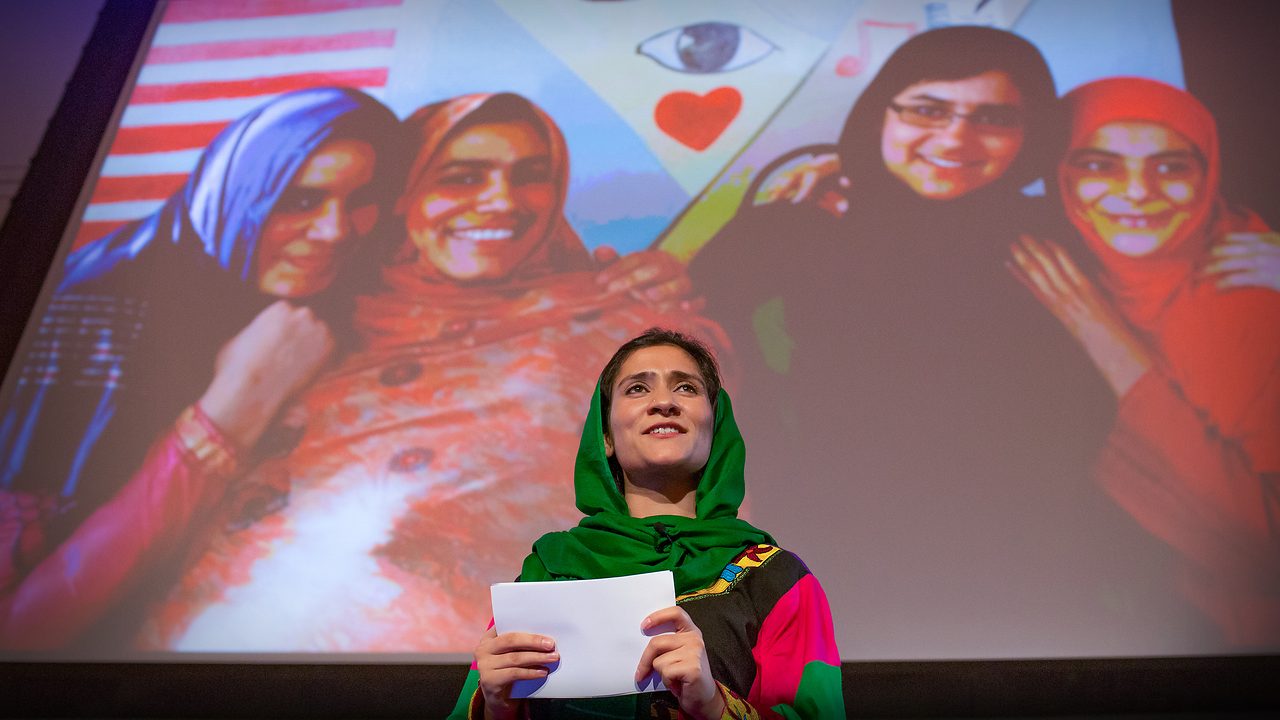
Dare to educate Afghan girls
Shabana Basij-Rasikh / 9:19
Explore another medium
- Papers
Gender Bias in Artificial Intelligence: Empowering Women Through Digital Literacy
Syed Sibghatullah Shah
This paper investigates the interplay between gender bias in AI systems and the potential of digital literacy to empower women in technology. Synthesizing research from 2010-2024, it examines how gender bias manifests in AI and the effectiveness of digital literacy initiatives.
Digital Feminism · Technology Critique - Articles
Women’s Digital Inclusion in Latin America and the Caribbean
Iliana Vaca-Trigo; María Elena Valenzuela
CEPAL connects digital participation to income, care and control over devices, asking why internet access alone cannot secure women’s autonomy.
Digital Feminism · Technology Critique
Continue through the issues
Reader responses
After the screening
Share your response or add another moving-image thread worth following.
Join the Discussion
Loading comments...
Support Us
If you find our content valuable, please consider supporting FemRes.