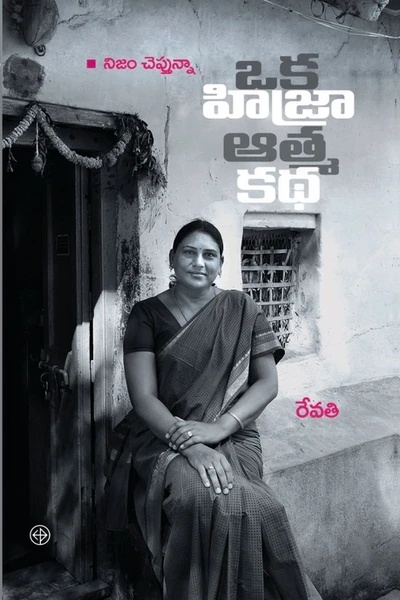
Queer Theory · Books
The Truth About Me: A Hijra Life Story
A. Revathi’s autobiography records gender, family expulsion, labor, survival, and dignity in hijra communities, bringing South Asian trans experience into feminist mapping.
Review and reading guide
A. Revathi’s The Truth About Me: A Hijra Life Story is both a life narrative and an intervention in who has the right to tell a marginalized community’s history. Revathi recounts leaving her family in Tamil Nadu, entering a hijra household, and navigating work, intimate relationships, violence, and later human-rights activism. The publisher’s account follows these experiences as a search for a life of dignity; the feminist question is not simply whether the narrator can “become” an identity, but what material conditions let her live it: safety, livelihood, kinship, bodily autonomy, and the ability to speak without having her life reduced to spectacle.
The history of how the book was made sharpens that question. In an interview with Revathi and translator V. Geetha, Revathi explains that she had previously collected stories from other hijras but did not feel entitled to publish other people’s lives without their consent. She chose to narrate her own. The interview also describes how she assembled the narrative from diaries and short presentations about her life. This is more than an author anecdote: it makes consent part of the book’s method. First-person testimony can make experiences audible while refusing the extractive impulse to turn other people’s disclosures into evidence without permission. The narrator’s authority comes not from claiming to represent all hijras, but from drawing a boundary around what is hers to tell.
Translation is another part of that boundary. The book was written in Tamil and translated into English by feminist historian V. Geetha. Geetha describes the challenge of carrying Revathi’s restrained, matter-of-fact tone into English and discusses the difficulty of translating Tamil words for gendered and sexual lives without either exoticizing them or losing their local resonance. That choice matters for readers: “hijra” is a historically situated South Asian identity and community formation, not a synonym that can be substituted for every transgender life. The translated text moves across languages, but it does not make regional histories interchangeable. Its vocabulary asks English-language feminism to encounter terms it cannot fully absorb into familiar categories.
The interview also identifies caste, class, the body, and desire among the questions Revathi’s account brings into view, reminding readers that gendered exclusion is never a single-axis experience.
Revathi’s account also complicates the idea that community automatically means safety. Hijra kinship can offer recognition, shared practices, and forms of survival when natal families and public institutions reject a person. At the same time, the memoir includes tensions around economic dependency, sex work, hierarchy, violence, and intimacy. Holding both sides together avoids two familiar distortions: casting the community only as a refuge, or treating it only as a source of harm. The social conditions that constrain a life do not erase a person’s agency; nor does agency make those conditions benign. Revathi’s story keeps dignity, vulnerability, desire, and political action in the same frame.
The book’s feminist force lies in how it turns this narrated life into a challenge to the institutions that claim authority over gender: family respectability, policing, medical language, journalism, and even movements that speak for queer or trans people. Its later connection to activism is important, but the memoir does not become valuable only because it can serve as testimony for a campaign. It also insists on the ordinary and intimate dimensions of life—love, adornment, disappointment, work, and the need for a livable future. For context across distinct traditions, read it beside Karukku, another Tamil life narrative that makes institutional power and community visible from a very different Dalit Christian position, and Transgender History, whose U.S.-centered historical method should be compared rather than treated as a universal frame.
Reading these experiences together also resists a tidy “escape and arrival” plot. Leaving the natal home does not end vulnerability; finding kinship does not erase conflict; activism does not convert a life into a finished lesson. The account can hold love, work, bodily choices, exploitation, and political speech without requiring one to cancel the others. That form matters for feminist reading because it locates agency in decisions made under constraint, not in a simple story of either total victimhood or individual triumph.
This is one situated autobiography, not an ethnographic template for hijra, kinnar, aravani, or transgender people across South Asia. Its historical moment and the terms available to Revathi and Geetha matter. Its enduring contribution is methodological as much as representational: it shows how self-narration can create knowledge while attending to consent, translation, and the limits of representation.
Sources: Penguin Random House India catalogue and description (edition, publication details, and publisher synopsis); The New Indian Express interview with A. Revathi and V. Geetha (writing process, consent, Tamil-to-English translation, and narrative tone).


Explore another medium
- Articles
The Transfeminist Manifesto
Emi Koyama
Emi Koyama connects gender autonomy, healthcare and feminist alliances, then revisits the manifesto’s exclusions in a critical postscript.
Trans Feminism · Bodily Autonomy - Films
Joyland
Saim Sadiq
Saim Sadiq’s Lahore family drama follows a married man drawn to a trans dancer, but its feminist force lies in tracing how patriarchal duty frustrates the desires of everyone sharing the household.
Queer Theory · Trans Feminism
Continue through the issues
Related theme · No. 03
Who gets to define the body?
From discipline and ageing to the internalised gaze, this issue follows the forces that watch, name and reclaim the body.
Bodily Autonomy
Related theme · No. 09
Who is allowed to desire?
Beginning with The Right to Sex, we ask whose desire is treated as natural and whose requires moral permission. Power shapes desire, but desire gives nobody a claim to another person’s body. Attraction, love, solitude and care have no single answer. Across sexual hierarchies, erotic writing, asexuality and situated experiences, we make room for exploration, uncertainty, refusal and a change of mind.
Bodily Autonomy
Reader responses
Readers' notes
Share your reading or add a thread worth following further.
Join the Discussion
Loading comments...
Support Us
If you find our content valuable, please consider supporting FemRes.