
Arab Feminism · Screen
Naila and the Uprising
Julia Bacha follows Palestinian women whose care and clandestine organizing sustained the First Intifada, asking why leadership did not secure political representation.
- Director
- Julia Bacha
- Year
- 2017
- Region
- Palestine / United States
- Duration
- 76 minutes · The producer lists a 76-minute feature and a separate 54-minute television cut; IDFA lists 75 minutes. Dialogue includes Arabic, Hebrew and English.
Reading the film
Women can sustain a movement and still be excluded from deciding its future. Julia Bacha’s 2017 documentary Naila and the Uprising places that contradiction within the history of the First Palestinian Intifada. Following Naila Ayesh connects underground organizers, relatives and journalists. The question is how national liberation and gender equality are fought for together, then assigned different places in an emerging political order.
Naila is not an isolated heroine whose courage floats free of relationships. Detention, pregnancy, miscarriage, later raising her son Majd and her husband’s deportation bind bodily experience to organizing. These events do more than provide an emotional background for public politics. They show that being able to leave home, pass on information, care for a child or remain involved depends on the organization of everyday life under power.
Bread, schools and clinics organize politics
The producer’s account connects leaflets concealed in bread with women’s provision of education, healthcare and everyday supplies. A leaflet does not become political only after leaving the kitchen. Familiar assumptions about women’s domestic activities can themselves offer a route for clandestine communication. Using the visibility and relative invisibility of gender roles does not mean accepting those roles as permanent limits.
Makeshift schools and clinics also carry resistance beyond the moment of a street demonstration. When education and healthcare are disrupted, sustaining life requires other arrangements: finding a place, carrying messages, getting food and knowledge to those who need them. This changes the scale on which leadership becomes recognizable. Those who keep a movement going are not only its public speakers or the people named in formal documents.
Yet recognizing care as political work should not assign it to women all over again. If their contribution is praised only because they nurture better or sacrifice more, recognition can preserve the same division of labor. A more demanding question follows: can those doing this work also decide the movement’s aims, resources and representatives, rather than simply receive its thanks?
Animation makes an absence visible
The documentary joins present-day interviews, historical footage, family material and animation. In her interview with Aviva Stahl, Bacha describes the difficulty of recording clandestine activity and the tendency of news cameras to focus on men. An incomplete archive is therefore not merely a collection that subsequently lost something. It also reflects which actions were considered worth filming in the first place. No surviving image does not mean no event.
Animation responds to those conditions of recording. It can bring bodily experiences without a camera present into the account, while remaining a later visual construction rather than newly discovered footage. Keeping that distinction makes documentary work more legible: how testimony is heard, how private memory meets public material, and how images help understanding without pretending to supply direct visual proof.
Majd’s relation to his mother carries memory across a generation. Having been present as a child does not mean automatically knowing, as an adult, what took place. Family history also needs telling, questioning and renewed connections. Intimacy becomes a place where political history can travel. A woman’s political standing, however, must not depend on motherhood or on her son’s eventual understanding of her.
The distance between organizing and representation
A sharp question runs through the film: why does leadership in action not automatically become representation within institutions? Women’s networks arrange boycotts, supplies and communication, yet negotiations and the redistribution of authority can recognize other people as the only legitimate speakers. The gap concerns more than whether women participated. It concerns who defines participation, and which experience can be converted into decision-making power.
Chronology matters here. Women participated in the 1991 Madrid delegation; that involvement should not disappear into a claim that women were absent from every negotiation. The secret 1993 Oslo process is a particular turning point criticized by the film and its discussion guide. Distinguishing the processes makes it possible to examine how grassroots organizers were bypassed, rather than replacing history with a single totalizing statement.
This puts pressure on the promise of national liberation first and women’s liberation afterward. If equality is always deferred, the capacities women have already built can be treated as temporary exceptions required by an emergency. Acknowledging this does not require measuring occupation and internal patriarchy as identical forms of power. It means that neither should become a reason to silence a struggle against the other.
Recognition must not demand a perfect heroine
The film concentrates on the force of nonviolent organizing. That focus does not mean every action during the First Intifada was nonviolent. It also creates a question for spectators: must women be brave, caring and morally unassailable before international audiences will recognize them as political subjects? Recovering an obscured history should not establish another test of respectable womanhood.
Sambizanga offers a carefully bounded comparison. Sarah Maldoror’s 1972 fiction places Maria’s search for her arrested husband, childcare and pursuit of information under colonial rule; Bacha lets Palestinian women organizers recount their own actions. Fiction set in Angola in 1961 and a documentary about Palestine around 1987 cannot verify each other’s historical claims. Both nevertheless ask whether those who sustain life can help determine political decisions.
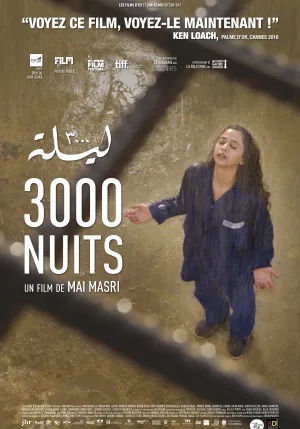
Reading the film alongside 3000 Nights brings another distinction into focus. Layal is a fictional composite, while Naila appears through her own testimony; they must not be merged into one story. The pairing asks when care becomes an instrument of incarceration, when it supports collective action, and how it can gain public recognition beyond a language of private sacrifice.
Pedro Lemebel’s I Speak for My Difference addresses a Chilean left-wing gathering in 1986, asking whether a revolutionary future can accommodate non-heterosexual desire and a feminine voice. Palestinian women organizers and a Chilean queer man are not one political subject, and the pairing establishes no direct connection between the works. It distinguishes joining a cause, sustaining it and having authority over it, while asking when shared liberation demands that members first hide part of themselves.



Explore another medium
- Articles
I Speak for My Difference
Pedro Lemebel
Pedro Lemebel’s 1986 manifesto confronts the Chilean left with poverty, queer exclusion and revolutionary masculinity, refusing solidarity on condition of self-erasure.
- Books
Women as Wartime Rapists
Laura Sjoberg
Using cases from Nazi Germany, Serbia, and ISIS, Laura Sjoberg asks how wartime sexual violence by women is sensationalized while perpetrators’ agency, accountability, and legal position remain obscured.
War and Peace · Political Violence
Reader responses
Discussion
Share your response and continue the reading together.
Join the Discussion
Loading comments...
Support Us
If you find our content valuable, please consider supporting FemRes.