Arab Feminism
Explore curated feminist content about Arab Feminism
- 026
- 26 items
- 06
- Connection paths
Connection paths
Adjacent topics
Media composition
Read along this issue
26 · Arab Feminism
Books
View all
Books · Mar 2021
Women and Gender in Islam
Leila AhmedLeila Ahmed traces how gender, law, and religious authority changed across Islamic history, then shows how colonial rule turned the veil and the ‘woman question’ into political symbols.
02
Books · May 2016
Headscarves and Hymens
Mona EltahawyMona Eltahawy connects control over women’s bodies at home, in public, and through the state, then asks what a sexual revolution can mean without flattening the Middle East into one story.
03
Books · Nov 2013
Do Muslim Women Need Saving?
Lila Abu-LughodLila Abu-Lughod asks how rescue narratives justify intervention, and how women's own priorities change the meaning of rights and freedom.
04
Books · Oct 2011
Politics of Piety
Saba MahmoodSaba Mahmood’s ethnography of Cairo’s women’s mosque movement challenges feminist theories that recognize agency only as resistance to norms and asks how ethical subjects are formed through embodied religious practice.
05
Books · Oct 2001
Women Claim Islam
miriam cookemiriam cooke reads Muslim women’s literary and public interventions as the making of Islamic feminism, a contested space in which religious belonging and demands for gender justice are claimed together.
06
Books · Jan 1975
Woman at Point Zero
Nawal El SaadawiNawal El Saadawi’s novel follows Firdaus, an Egyptian woman on death row, as she recounts a life shaped by poverty, sexual violence and economic dependence. This reading examines the narrative frame and avoids treating one character’s experience as representative of all Arab women.
Films
View all
Films · May 2023
Four Daughters
Les Filles d’OlfaKaouther Ben HaniaKaouther Ben Hania uses testimony and reenactment to examine intergenerational violence, maternal authority and extremist recruitment in a Tunisian family.
02
Films · May 2022
The Blue Caftan
Le Bleu du caftanMaryam TouzaniTouzani connects craft, silence and care to queer desire within marriage, asking how love beyond possession can retain a place and choices for everyone.
03
Films · May 2019
Papicha
Mounia MeddourNedjma sneaks out of her dorm to sell dresses, then stages a show back inside it. A white haïk, three friends and the speech of Algiers help explain who gets to decide how clothing can be worn.
04
Films · Nov 2017
Naila and the Uprising
Julia BachaJulia Bacha follows Palestinian women whose care and clandestine organizing sustained the First Intifada, asking why leadership did not secure political representation.
05
Films · May 2017
Beauty and the Dogs
Aala Kaf IfritKaouther Ben HaniaKaouther Ben Hania’s nine long takes follow Mariam through hospitals and police stations after a rape by police officers, tracing who can act on evidence.
06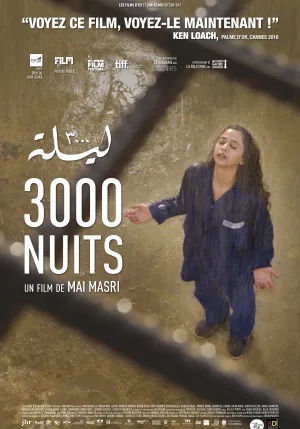
Films · Sep 2015
3000 Nights
3000 LaylaMai MasriMai Masri’s prison drama follows a Palestinian mother whose struggle over childbirth and childcare connects bodily control, collective care and political resistance.
Videos

Videos · Jun 2013
A Saudi Woman Who Dared to Drive
Manal al-SharifSaudi activist Manal al-Sharif recounts how restrictions on driving reached her family and workplace, and how a video, a shared day of action, petitions, and a lawsuit made distinct demands on public institutions.
02
Videos · May 2012
The Attitudes That Sparked the Arab Spring
Dalia MogahedDalia Mogahed puts Egypt’s growth figures next to people’s ratings of their lives, then turns to questions about women’s work. Read the 2012 surveys alongside the talk to see what an answer about equality measures.
03
Videos · Nov 2010
Women, Wartime and the Dream of Peace
Zainab SalbiZainab Salbi redirects attention from war’s front line to the women who maintain daily life, survive gendered violence, and are then excluded from formal peace negotiations.
Podcasts

Articles
Articles · Aug 2022
Lessons from Morocco’s Women’s Rights Movement
Hamza BensoudaHamza Bensouda draws lessons from coalition-building in Morocco. The amendment to penal code article 475 and a Maghreb group’s guide show what movements can gain from a precise demand and from sharing evidence.
02Articles · Feb 2020
Lebanese Women and the Politics of Representation
Carmen GehaWriting after Lebanon’s October 2019 uprising, Carmen Geha asks what it would take to bring women’s organizing, priorities, and decision-making power into parties, unions, and elections.
03Articles · Dec 2019
Gender Justice and Equality before the Law in the Arab States Region
UN Women, UNDP, UNFPA and ESCWAThis United Nations review compares nationality transmission and protection orders. Its examples show how equality in one legal provision can depend on household status, documentation, and procedure elsewhere.
04Articles · Jan 2009
Home Truths: A Global Report on Equality in the Muslim Family
MusawahMusawah’s global report draws on submissions from groups in thirty countries. Morocco’s family-law reforms and marriage registration in Britain show how different procedures shape access to protections.
Papers
Papers · Jan 2024
“Like Seeking Out a Lost Friend”: Reconsidering Pioneer Arab Feminists and Their Networks as Part of a/the First Wave
Roxanne DouglasRoxanne Douglas reconstructs journals, salons, correspondence, and organizing across Egypt, Palestine, and Lebanon to place Arab feminist networks inside - not after or outside - the history of feminism’s first wave.
02Papers · Oct 2020
Rights, Democracy, and Islamist Women’s Activism in Tunisia and Egypt
Anwar Mhajne and Rasmus BrandtMhajne and Brandt compare the Egyptian Muslim Sisterhood and women in Tunisia’s Ennahda, tracing repression, entry into institutions and claims about rights.
03Papers · May 2020
Explaining Support for Muslim Feminism in the Arab Middle East and North Africa
Saskia Glas and Amy AlexanderGlas and Alexander use 51 surveys in 15 Arab countries to study how support for women’s rights can coexist with strong religious attachment.
04Papers · Jan 2013
What Do Women Want? A Critical Mapping of Future Directions for Arab Feminisms
What do women want? A critical mapping of future directions for Arab FeminismsMervat HatemThrough Egyptian women’s periodicals, religious interpretation and debates about reform, Mervat Hatem asks who gets to write Arab feminist history.