Reproductive Justice · Books
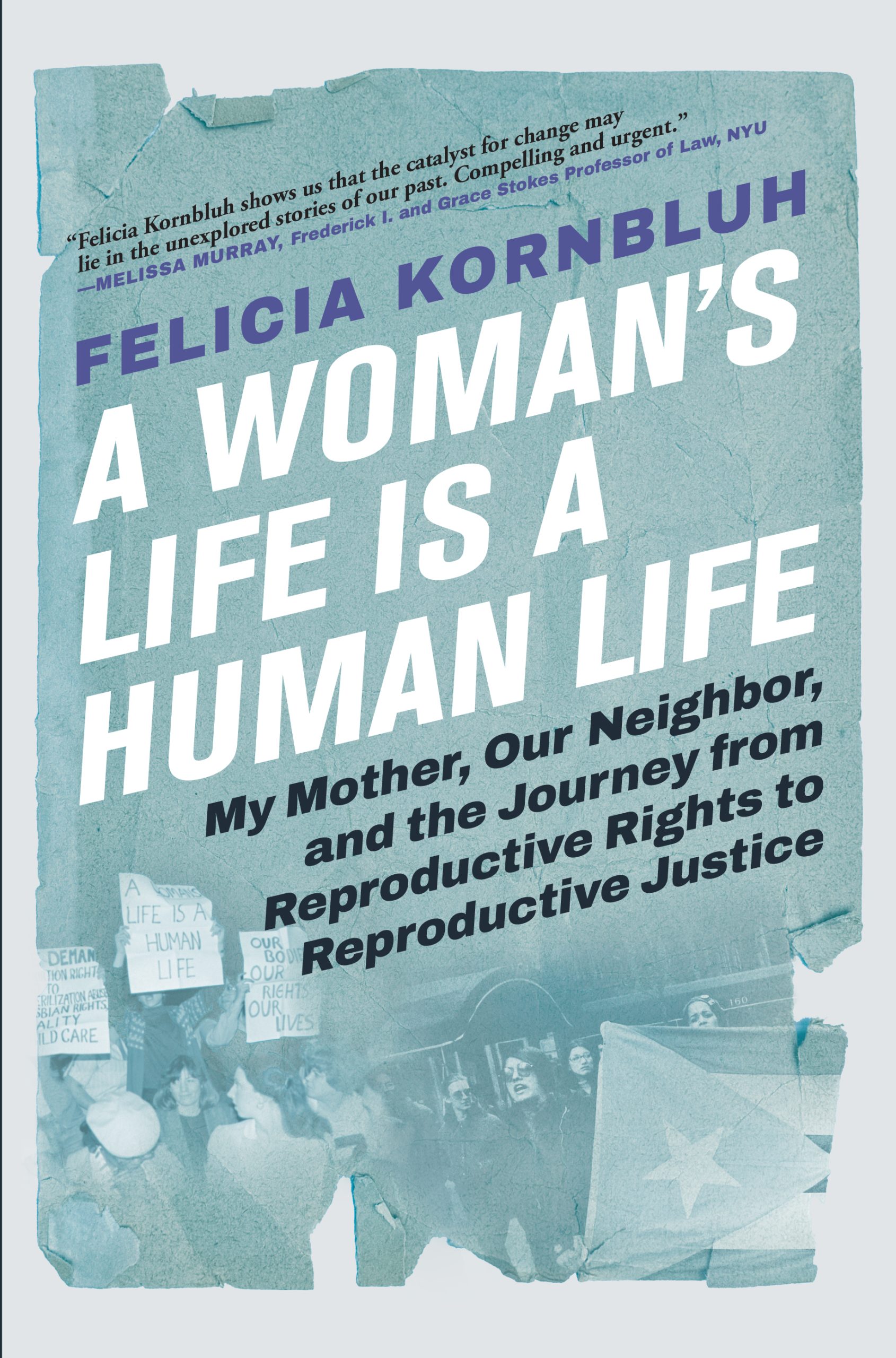
A Woman's Life Is a Human Life
My Mother, Our Neighbor, and the Journey from Reproductive Rights to Reproductive Justice
Kornbluh links abortion rights and resistance to sterilization abuse, showing why reproductive autonomy includes the right to bear children.
Review and reading guide
In the grand narrative of American reproductive rights history, we often hear the names of Supreme Court cases—Roe v. Wade. However, historian Felicia Kornbluh reminds us in “A Woman’s Life Is a Human Life” that before there was a “Jane Roe,” the real champions who defined and achieved reproductive rights were ordinary people working in their local communities. Published in 2023 to coincide with the fiftieth anniversary of Roe v. Wade, this work centers on two grassroots movements in New York, rewriting the history of America’s reproductive rights movement.
As a professor of History and Gender Studies at the University of Vermont, Kornbluh does not adopt the grand perspective common in traditional historical works. Instead, she chooses the most intimate angle: her mother, Beatrice Kornbluh Braun, and their across-the-hall neighbor, Dr. Helen Rodríguez-Trías. This personalized narrative strategy not only gives history warmth but, more importantly, reveals a long-overlooked truth: from the beginning, the reproductive justice movement was never a singular, homogeneous struggle, but a diverse movement driven by women from different backgrounds with different demands.
Two movements, not one half of freedom
Beatrice helped draft a proposal to remove criminal regulation of abortion rather than merely widen exceptions approved by doctors. The law passed in 1970 was modified: it removed criminal penalties before the twenty-fourth week of pregnancy and imposed no residency requirement. In the book excerpt, Kornbluh distinguishes the original demand from the achieved reform. People could travel to New York for care, but fares, time and the ability to leave work still affected who could arrive. Legal change mattered without removing every barrier to a service.
The other history follows Dr. Helen Rodríguez-Trías and the Committee to End Sterilization Abuse. Opposing abortion prohibition and opposing coerced sterilization are not contradictory: both reject someone else arranging a person’s reproductive future. Organizers did not always recognize them as the same political problem. Some were primarily fighting an inability to end pregnancy; others also faced institutions judging them unfit to become mothers. Class, race and colonial relations gave autonomy different urgent meanings. Those differences cannot be replaced by a homogeneous category of women.
Karen Stamm’s experience brings the contradiction into one medical encounter. In 1963 she obtained permission for a therapeutic abortion while facing pressure to accept sterilization too; she refused. Consent to end this pregnancy did not authorize a doctor to determine her reproductive capacity permanently. The case makes informed consent more than a signature. Can a person reject an additional intervention without losing the care she needs? That question reveals the distribution of power beneath an apparently available choice.
By juxtaposing these two seemingly independent movements, Kornbluh demonstrates the conceptual shift from “reproductive rights” to “reproductive justice.” The reproductive justice framework, proposed by Black feminists in the 1990s, emphasizes not only the right not to bear children, but also the right to bear and raise children in safe and supportive environments. It links reproductive issues with economic justice, racial justice, and environmental justice, recognizing that women’s reproductive choices are constrained not only by law but also by structural inequalities such as poverty, racial discrimination, and healthcare injustice.
Consent is more than a signed form
One of the book’s core contributions lies in its emphasis on “people power.” Kornbluh meticulously documents how these two movements achieved key victories through grassroots organizing, community mobilization, and coalition building—victories that did not depend on federal courts. This point becomes particularly significant after Roe v. Wade was overturned in 2022. When the Supreme Court no longer protects abortion rights, we need to return to the history of these grassroots movements for inspiration: truly lasting change comes from people’s organization and action, not from court decisions.
Protection itself can produce disagreement. Preventing sterilization abuse requires constraining institutions and doctors, while some abortion-rights advocates feared new regulations could obstruct voluntary services. The conflict cannot be resolved by invoking solidarity alone. It requires asking whose authority a rule restricts, whether a process permits understanding and refusal, and whether people retain alternatives. Otherwise protection can become another way to decide for them.
Coalition without erasing different needs
The title comes from a slogan created by Maxine Wolfe, a member of the Committee for Abortion Rights and Against Sterilization Abuse. In an author interview, Kornbluh places it in the dispute over treating only embryos as lives deserving protection. Women’s lives must not acquire value only through reproduction. That position can connect different demands without making New York’s movement history a universal script for every setting.
Read this history beside Childfree: the distinction between voluntary and coerced sterilization concerns decision-making power, not the name of a procedure. Never Rarely Sometimes Always makes the journey to care tangible, while Precarious Motherhood carries the question beyond birth, examining whether support expands the life a person can actually lead.


Explore another medium
- Podcasts
Childfree: Sterilized at 30
Catalina May & Martín Cruz / Las Raras
Francy Uribe’s story connects choosing not to have children with the relational costs of bodily autonomy.
Reproductive Justice · Reproductive Autonomy - Films
Never Rarely Sometimes Always
Eliza Hittman
In the wake of Roe v. Wade being overturned by the Supreme Court, Eliza Hittman's Never Rarely Sometimes Always is necessary viewing. A tiny independent film that topped critics' best-of lists, it's about a pair of friends who are forced to travel from their small Pennsylvania town to New York City in search of medical aid for an unwanted pregnancy.
Reproductive Autonomy · Abortion Rights
Continue through the issues
Reader responses
Readers' notes
Share your reading or add a thread worth following further.
Join the Discussion
Loading comments...
Support Us
If you find our content valuable, please consider supporting FemRes.