FemRes · Research index
Search
Trace a concept across books, moving images, essays, voices, and feminist research.
- 1092
- Discover feminist resources in 1092 curated items
- 291
- All topics
Browse by medium
Refine
Search results
1092 items
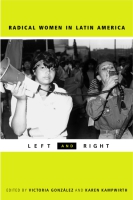
Radical Women in Latin America: Left and Right
A six-country study of women’s organizing across the Latin American left and right, asking how political agency can coexist with sharply different projects and gender orders.
- Latin American Feminism
- Radical Feminism
- Social Movements

The Vagina Monologues
Revolutionary feminist theatrical work that breaks gender taboos through direct expression of women's bodily experiences, laying foundations for global anti-sexual violence movements.
- Bodily Autonomy
- Anti-Sexual Violence
- Women's Literature
The Transfeminist Manifesto
Emi Koyama connects gender autonomy, healthcare and feminist alliances, then revisits the manifesto’s exclusions in a critical postscript.
- Trans Feminism
- Bodily Autonomy
- Coalition Politics
Feminist Contributions to the Study of Gender Violence
Contribuições feministas para o estudo da violência de gêneroSaffioti distinguishes gender, domestic and intrafamilial violence, explaining how patriarchal authority operates through delegated power and everyday relations.
- Violence Against Women
- Patriarchy Critique
- Feminist Theory
The Girl Who Cried Pain
The Girl Who Cried Pain: A Bias Against Women in the Treatment of PainHoffmann and Tarzian separate pain experience from clinical credibility, showing why psychological explanations must not become reasons to dismiss women’s suffering.
- Gender Discrimination
- Mental Health
- Bodily Autonomy
Sustaining Human Life: A Women’s Issue?
La sostenibilidad de la vida humana: ¿un asunto de mujeres?Cristina Carrasco puts the maintenance of life at the center of economics, examining conflicts between care time, profit and unequal responsibility.
- Feminist Economics
- Care Economy
- Reproductive Labor
Beyond Identity: Feminism, Identity and Identity Politics
This influential 2000 article critiques both Judith Butler's theory of the subject and the practice of identity politics in feminism. Hekman proposes a middle ground between modern and postmodern conceptions of the subject while arguing for removing identity from the political realm entirely. The paper challenges fundamental assumptions about how feminism organizes politically around identity categories.
- Feminist Theory
- Identity Politics
- Postmodern Feminism
But the empress has no clothes! Some awkward questions about the 'missing revolution' in feminist theory
This provocative 2000 article challenges the state of contemporary feminist theory, arguing that while feminist epistemology, methodology and ethics have undergone revolutionary transformation, feminist theory remains trapped within parallel structures to mainstream/malestream social theory. Stanley and Wise call for a fundamental feminist autocritique and the development of feminist metatheory.
- Feminist Theory
- Academic Feminism
- Feminist Literary Criticism
Feminist Epistemology and Value
This 2000 article by Alison Assiter develops a distinctive approach to feminist epistemology centered on the concepts of ‘emancipatory values’ and ‘epistemic communities.’ Assiter argues that knowledge production is fundamentally shaped by the values of the communities in which it occurs, and that feminist epistemology should focus on creating communities whose values promote emancipation rather than oppression. The paper offers a modernist feminist epistemology that is collective rather than individualist, value-centered rather than value-neutral.
- Feminist Theory
- Academic Feminism
- Feminist Literary Criticism
Book Review: Gender and Institutions: Welfare, Work and Citizenship
This book review discusses 'Gender and Institutions: Welfare, Work and Citizenship' edited by Moira Gatens and Alison Mackinnon. Bryson, as a distinguished Australian feminist sociologist, draws from her deep research background in welfare states and gender policy to evaluate the book's analysis of gender dimensions in Australian institutions.
- Feminist Economics
- Gender Politics
- Feminist Theory
Gender's Nature: Intersexuality, Transsexualism and the 'Sex'/'Gender' Binary
This groundbreaking article challenges the fundamental distinction between 'sex' and 'gender' by demonstrating that 'sex' itself is a social construction. Through examining intersexuality and transsexualism as embodied experiences that disrupt binary categories, Hird reveals how medical and social institutions work to maintain artificial divisions. The paper questions whether emphasizing sexual difference or exposing sex as construction better serves feminist goals for social transformation.
- Queer Theory
- Gender Identity
- Trans Feminism
Higamous, hogamous, woman monogamous
This essay critically examines evolutionary psychology's claims about gender differences and mate selection, particularly the popular notion that women are 'naturally monogamous' while men are 'naturally polygamous.' Rees reveals how these scientific narratives serve gender essentialism and how feminism responds to evolutionary psychology's challenges.
- Feminist Theory
- Science Studies
- Gender Norms
Pure tolerance revisited
This radical feminist theoretical article revisits the place of tolerance in feminist theory, critically responding to the pluralist stance advocated by the inaugural issue of Feminist Theory journal. Drawing on Herbert Marcuse's theory of 'repressive tolerance', Thompson argues that unlimited tolerance provides shelter for patriarchal and anti-feminist viewpoints, thereby undermining feminism's core as a liberatory politics. She contends that feminism must maintain intolerance toward male domination to preserve its theoretical coherence and political efficacy.
- Feminist Theory
- Radical Feminism
- Feminist Epistemology
Reconceiving Citizenship: The Challenge of Mothers as Political Activists
An exploration of how mothers as political activists challenge traditional conceptions of citizenship. Reiger examines maternal activism in Australian childbirth reform movements, arguing that mothers' claims for participation in health policy reconceive citizenship to include care, embodiment, and community advocacy.
- Feminist Theory
- Political Participation
- Ethics of Care
Women, Peace and Security: Resolution 1325
Resolution 1325 connects women’s protection to participation in negotiation and reconstruction, while representation still requires scrutiny of resources and power.
- War and Peace
- Political Participation
- Human Rights
Orchestrating Impartiality
Orchestrating Impartiality: The Impact of “Blind” Auditions on Female MusiciansGoldin and Rouse study screened auditions in eight US orchestras, retaining statistical uncertainty and contrary results rather than treating anonymity as a universal cure.
- Workplace Equality
- Arts and Performance
- Research Methods
Aspiring to a politics of alliance: Response to Sylvia Walby's 'Beyond the politics of location: The power of argument in a global era'
Ann Phoenix’s reply to Sylvia Walby reframes a debate about feminist knowledge around a political question: how can collective claims cross difference without flattening it?
- Feminist Theory
- Intersectional Feminism
- Identity Politics
Being reasonable, telling stories
In a 2000 feminist-theory exchange, Rita Felski broadly agrees with Sylvia Walby while questioning how Walby characterizes Donna Haraway and Iris Marion Young.
- Feminist Theory
- Feminist Literary Criticism
- Feminist Epistemology
Beyond the Politics of Location: The Power of Argument in a Global Era
This 2000 article by leading feminist sociologist Sylvia Walby challenges the dominance of standpoint epistemology and the 'politics of location' in feminist theory. Walby argues that in an era of globalization, feminism needs to move beyond location-based knowledge claims and embrace the power of reasoned argument to make effective universal claims about gender justice. The paper engages critically with postmodern and postcolonial feminist theories that privilege particular standpoints over universal reasoning.
- Feminist Theory
- Postmodern Feminism
- Academic Feminism
In search of feminist theory
This essay is Walby's response to critiques from Phoenix, Knapp, and others, further elaborating her position that feminism needs robust theorization and universal claims. Walby argues that in the era of globalization, feminism cannot be limited to politics of location but needs to develop theoretical frameworks capable of analyzing systemic oppression across local boundaries.
- Feminist Theory
- Global Feminism
- Feminist Epistemology
Indexing alternatives: Feminist development studies and global political economy
This essay explores how feminism reconstructs development studies and global political economy analysis, proposing alternative theoretical frameworks for understanding the intersections of globalization, development, and gender. Ramamurthy critiques mainstream development discourse and advocates for analytical perspectives centered on social reproduction and women's agency.
- Marxist Feminism
- Feminist Economics
- Development Studies
Migrant Filipina Domestic Workers and the International Division of Reproductive Labor
Parreñas's classic article makes global care chains concrete through migrant Filipina domestic workers, showing how care crises in middle-class households are displaced onto women from the Global South while creating new care gaps in sending communities.
- Migration
- Care Economy
- Domestic Labor
More Power to Argument
This essay responds to Sylvia Walby's claim that feminism needs to move beyond politics of location toward universal arguments. Knapp, drawing from German Critical Theory and feminist traditions, explores the power of argument while warning against power relations that abstract universalism might mask, advocating for argumentative practice that is both critically powerful and acknowledges situatedness.
- Feminist Theory
- Feminist Epistemology
- Critical Theory
Re-reading the Second Sex: Theorizing the Situation
This essay re-evaluates Simone de Beauvoir's philosophical contributions in The Second Sex, particularly her theorization of the concept of 'situation.' Stavro argues that Beauvoir was not merely a follower of Sartre but critically transformed existentialism through embodied, situated subjectivity, establishing a unique foundation for feminist theory.
- Existentialist Feminism
- Feminist Theory
- Feminist Philosophy